
Commercial Truck Dash Camera Systems: Complete Solutions for Modern Fleets
Why Systems Matter More Than Devices
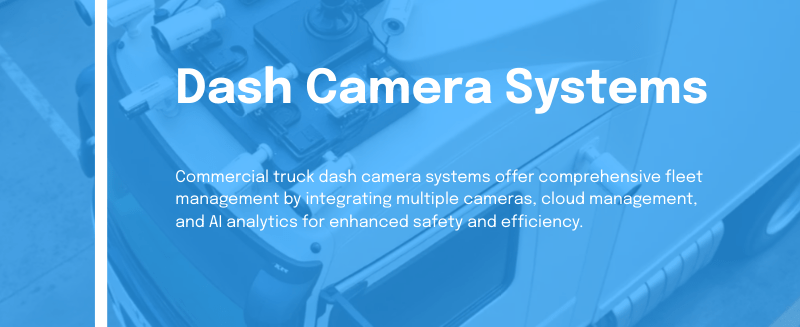
When it comes to commercial transportation, a single dash cam is no longer enough. Large fleets need comprehensive dash camera systems — solutions that integrate multiple cameras, cloud-based management, and AI analytics into a single platform.
These systems don’t just capture video. They provide 360-degree visibility, driver coaching tools, and operational insights that improve safety while reducing costs. For executives responsible for hundreds of vehicles, the difference between a standalone device and a system is night and day.
What Defines a “System” in Commercial Truck Dash Cameras?
A commercial truck dash camera system goes beyond an individual camera. It typically includes:
- Multiple Camera Angles: Road-facing, cabin-facing, side, and rear views.
- Centralized Software Platform: A dashboard where managers can monitor all vehicles in real time.
- Cloud-Based Storage: Automatic uploads and searchable archives.
- AI Event Detection: Identifies risky behaviors and triggers alerts.
- Integration with Telematics: Syncs with GPS tracking, routing, and maintenance systems.
A commercial truck dash camera system is a fleet-wide solution combining hardware, cloud connectivity, and analytics to deliver safety and operational control.

Why Fleets Choose Full Systems Instead of Standalone Dash Cams
Standalone dash cams work for individual drivers. Systems deliver value for fleets by:
- Scaling Across Dozens or Hundreds of Vehicles: Centralized control prevents managers from juggling multiple devices.
- Ensuring Consistency: Standardized installation and software simplify compliance.
- Reducing Data Silos: Video, GPS, and driver performance data live in one platform.
- Supporting Proactive Management: AI alerts and system dashboards let managers act in real time.
This system-level approach turns dash cams into a strategic fleet asset instead of just a safety accessory.
Core Features of Commercial Truck Dash Camera Systems
Multi-Camera Configurations
Systems often support 2–8 cameras per truck, covering blind spots and cargo areas. This 360° coverage is especially valuable for larger vehicles in high-traffic or urban environments.
Cloud-Based Fleet Dashboards
Managers log in to one portal to view live footage, download clips, and analyze driver performance across the entire fleet.
AI-Driven Safety Alerts
Systems use sensors and video analytics to detect distracted driving, tailgating, or fatigue. Alerts are sent to managers or even directly to drivers in real time.
Data-Driven Driver Coaching
Video clips and performance metrics help managers conduct coaching sessions backed by clear evidence.
Integration with ELDs and Telematics
Commercial truck dash camera systems can sync with existing fleet management platforms, combining video + compliance + routing + maintenance into one ecosystem.

Business Value: The System-Level Advantage
- Liability Protection at Scale: Video + data evidence across the entire fleet reduces exposure to lawsuits.
- Operational Oversight: Managers can verify routes, deliveries, and driver performance from a central dashboard.
- Insurance Savings: System-wide adoption shows insurers a proactive approach, often resulting in significant premium reductions.
- Compliance Simplification: Centralized storage and reporting simplify audits and FMCSA requirements.
- Employee Accountability: Systems help standardize expectations across the workforce.
Cost of Commercial Truck Dash Camera Systems
- Hardware (Per Vehicle): $800–$1,500 depending on the number of cameras installed.
- Cloud & Software Subscriptions: $25–$50 per vehicle per month, depending on features.
- Installation Costs: Professional installation is often required for multi-camera setups.
For larger fleets, this scales quickly — but so does the ROI. Just one avoided lawsuit or theft recovery can offset an entire system rollout.
Video Telematics: The Backbone of Commercial Camera Systems
When evaluating “systems,” one core concept underpins modern commercial truck dash camera systems: video telematics. Video telematics merges video capture with traditional telematics (speed, location, engine diagnostics, etc.), creating a unified data layer.
This shift transforms dash cams from passive recorders into active intelligence engines. Instead of waiting for an incident, systems now flag and contextualize risk in real time, offering fleets a chance to prevent collisions, not just respond to them.
Key advantages of video telematics systems:
- Correlation of events (video frames) with telemetry data (braking force, acceleration)
- Edge-processing that filters out non-critical footage (reduces bandwidth)
- Triggered uploads of “event clips” rather than full streams
- Unified dashboards where video and telematics metrics coexist
In short: a commercial truck dash camera system is incomplete without full video-telemetry synergy.

ROI Modeling: How to Quantify System Value
To gain executive buy-in, building a quantitative business case is essential. Here’s a refined approach — based on vendor data and industry benchmarks:
1. Identify Key Value Buckets
Break down savings into categories such as:
- Claims & Litigation Avoidance
- Insurance Premium Reductions
- Fuel & Maintenance Efficiencies
- Downtime & Administrative Cost Reduction
- Driver Retention & Safety Culture Value
2. Use Proven Benchmarks
For example, many studies and vendor reports show fleets recoup their investment within 6–12 months.
One vendor suggests using four data points (accident frequency, average claim cost, potential premium discount, fuel/efficiency gains) to estimate annual savings from GPS + video systems.
3. Build Conservative vs. Optimistic Scenarios
Model a “low impact” scenario (e.g. 10% reduction in claim costs, 5% fuel savings) and a “high impact” scenario (25–30% reduction in claims). Present both to stakeholders.
4. Include Hidden Benefits
Don’t forget intangible ROI: better driver morale (feeling protected), smoother audits, brand reputation, and lower investigative workload for safety teams.
When pitched right, this becomes less of a defensive cost and more of an operational investment.
Advanced Technologies Elevating Systems
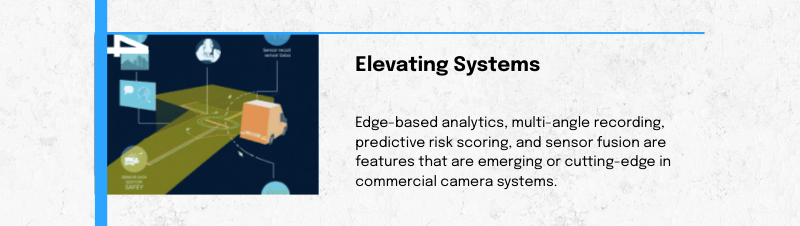
To truly differentiate in content, let’s cover features that are emerging or cutting-edge in commercial camera systems.
Edge-Based Analytics & On-Device AI
Rather than sending every frame to the cloud, systems increasingly perform processing “on the edge” (inside the vehicle) to detect critical events in real time. A study on “In-Vehicle Edge System for Real-Time Dashcam Video Analysis” shows feasibility for handling dual-camera feeds with under 200 ms latency.
This reduces bandwidth load, lowers cloud costs, and ensures alerts are delivered instantly — a key advantage for systems operating across tens or hundreds of trucks.
Multi-Angle, Conditional Recording
Some systems conditionally record side, rear, or cargo views only when sensors detect motion or proximity changes — reducing data churn while capturing critical perspectives when needed. Advanced platforms also sequence cameras to spotlight relevant areas (e.g. during backing maneuvers).
Predictive Risk Scoring
Beyond flagging discrete events, newer systems score driver risk profiles over time (based on behavior clusters). This lets safety teams prioritize coaching proactively.
Sensor Fusion
Systems are beginning to merge video with additional sensors — e.g. LiDAR, radar, or proximity detectors — creating context around blind spots or collision risk. While still nascent in trucking, this integration is a frontier many fleets will adopt.
Privacy-by-Design and Data Governance
As cameras proliferate, systems must include configurable data access, anonymization options, and compliance with privacy regulations (some states or local jurisdictions require strict disclosure). Leading platforms embed these controls to prevent overreach.

Vendor Differentiation: What Sets Premium Systems Apart
Commercial buyers often ask: “Why pay more?” The following differentiation layers can justify premium positioning:
1. Review & Triage Services
Some providers (e.g. Lytx) include human review of flagged events (AI suggests clips, human analysts validate). This ensures fewer false positives reach managers.
2. Depth of Integration
How seamlessly does the camera system integrate with your existing fleet management, dispatch, ELD, or maintenance systems? Best-in-class providers offer open APIs and modular interoperability.
3. Scalability & Bandwidth Efficiency
At scale, data cost is huge. Providers that optimize upload frequency, edge filtering, and conditional recording offer lower TCO.
4. Hardware Ecosystem
Better systems support add-ons (trailer cameras, cargo zone monitoring, side sensors) under the same platform — enabling expansion later.
5. Service & Support
Warranty, hardware replacement programs, system training, and support SLAs are often the difference between a good and a great solution.
6. Proven Case Studies
Vendors with documented ROI stories (e.g. saving fleets hundreds of thousands in disputed claims) provide stronger credibility in procurement cycles.
Implementation Pitfalls & Mitigation
Even good systems fail in deployment if the change management is handled poorly. Here are pitfalls and how to avoid them:
Driver Resistance
Pitfall: Drivers view cameras as surveillance.
Mitigation: Launch with transparency — explain the safety/exoneration purpose and use a pilot program. Include drivers in rollout planning.
Data Overload
Pitfall: Managers drown in video floods.
Mitigation: Use event-triggered uploads (versus full recording), dashboards with smart filters, and human-reviewed alerts to surface priority clips.
Poor Hardware Placement
Pitfall: Windshield or camera misplacement causes blind spots or glare issues.
Mitigation: Engage professional installers, follow vendor mount guidelines, and validate coverage in tests.
Compatibility Oversights
Pitfall: Systems fail to mesh with legacy telematics or dispatch platforms.
Mitigation: Run integration tests early. Favor vendors with APIs and open standards.
Security & Privacy Risks
Pitfall: Unsecured video data leaks.
Mitigation: Confirm encryption (in transit, at rest), role-based access, and privacy settings (e.g. interior camera muting in certain zones).
Underestimating Bandwidth Costs
Pitfall: Cloud and cellular expenses spiral.
Mitigation: Negotiate data plans, cap video quality in non-event times, limit auto-upload settings.
FAQ: Commercial Truck Dash Camera Systems
What is a commercial truck dash camera system?
A commercial truck dash camera system is a multi-camera setup integrated with cloud software, AI event detection, and telematics. Unlike single dash cams, these systems cover multiple angles, store footage centrally, and provide fleet-wide oversight. They are designed for scalability, compliance, and operational control.
How do commercial dash camera systems differ from regular dash cams?
Regular dash cams are standalone devices, usually road-facing only, that store footage on an SD card. Commercial systems include multiple cameras (road, cabin, side, rear), real-time uploads, GPS integration, and centralized management dashboards. They’re built to support fleets rather than individual drivers.
Do commercial truck dash camera systems reduce insurance costs?
Yes. Many insurers offer premium discounts (often 5–15%) for fleets that use dash camera systems. Beyond discounts, the bigger savings come from reduced claims: video evidence helps exonerate drivers, accelerates claims processing, and prevents fraudulent lawsuits.
Are camera systems legal in commercial trucks?
Yes. Dash camera systems are legal in commercial vehicles as long as they don’t obstruct the driver’s line of sight and comply with FMCSA guidelines. Some states have specific rules about driver consent for cabin-facing cameras, so fleets should include usage policies in driver agreements.
Do these systems require a monthly subscription?
Most commercial truck dash camera systems require a subscription to cover cloud storage, AI event analysis, and software access. Costs typically range from $20–$50 per vehicle per month. While this adds to operating costs, the value in liability protection and efficiency usually outweighs the fees.
How much does a full dash camera system cost per vehicle?
Hardware typically ranges from $800–$1,500 per truck, depending on the number of cameras installed. Professional installation adds to upfront cost. Ongoing cloud service fees range from $25–$50 per month per vehicle. ROI is often achieved within 6–12 months due to savings on insurance, claims, and efficiency gains.
Can dash camera systems cover blind spots and trailers?
Yes. Advanced systems support multiple cameras positioned on the sides, rear, and trailer of a truck. This provides 360° visibility, which is particularly useful in preventing sideswipe accidents, backing incidents, and cargo theft.
How do AI features in camera systems work?
AI-enabled dash camera systems detect risky behaviors such as distracted driving, tailgating, lane drifting, or fatigue. They analyze footage in real time and can trigger alerts to drivers or managers. This transforms cameras from passive recorders into proactive safety tools.
Do camera systems integrate with fleet management software?
Yes. Leading providers offer APIs or direct integrations with fleet management, dispatch, ELD, and telematics platforms. This allows managers to see video, GPS data, driver behavior scores, and maintenance alerts in a single dashboard.
What’s the lifespan of a commercial dash camera system?
Most systems last 3–5 years depending on usage, vibration exposure, and environmental conditions. Vendors typically offer warranties, replacement programs, or upgrade paths to keep fleets current with the latest hardware.
Can dash camera systems operate in poor weather or at night?
Yes. Most modern systems include night vision, infrared sensors, and wide dynamic range (WDR) technology to ensure clear footage in rain, snow, low light, and glare conditions. Multi-camera systems also ensure visibility even when one angle is obstructed.
Will drivers resist dash camera systems?
Some drivers initially view cameras as surveillance. However, fleets that communicate openly — emphasizing protection against false claims and reduced blame for accidents — often see acceptance grow quickly. Incentives for safe driving can also help turn resistance into buy-in.
Can footage be used in court or regulatory audits?
Yes. Courtrooms, insurers, and regulators all accept dash camera footage as evidence. When paired with GPS and telematics data, it becomes nearly indisputable, which strengthens a fleet’s defense in liability disputes.
How does cloud storage improve system value?
Cloud storage ensures footage is uploaded automatically, accessible instantly, and safe from tampering. Without cloud storage, fleets must retrieve SD cards manually, risking lost or overwritten data. Cloud systems also allow managers to search across the fleet by date, vehicle, or event type.
Do dash camera systems help with driver coaching?
Yes. Systems capture video clips of unsafe behaviors, which managers can use in coaching sessions. AI risk scoring also tracks performance over time, allowing managers to reward safe drivers and prioritize coaching for higher-risk individuals.
Can these systems detect theft or unauthorized use?
Yes. With GPS tracking and multi-camera coverage, systems can detect unauthorized vehicle movement, provide live location, and capture video evidence of break-ins or cargo theft attempts.
What industries benefit most from dash camera systems?
While any fleet can benefit, industries with higher liability exposure see the fastest ROI: long-haul trucking, last-mile delivery, construction transport, public transportation, and utility/municipal fleets.
How long is footage stored in a system?
It depends on subscription tier and configuration. Most systems store rolling footage for 30–90 days in the cloud, while critical “event clips” (accidents, harsh braking, alerts) are archived indefinitely.
What pitfalls should fleets avoid when deploying systems?
- Poor communication with drivers (leads to resistance).
- Overloading managers with unfiltered footage.
- Not testing integration with existing platforms.
- Installing cameras incorrectly, causing glare or blind spots.
Mitigating these issues with pilot programs, event-based recording, and professional installation ensures smoother rollouts.