
Can Dash Cams Track Location and Speed?
Dash cams can track location and speed when equipped with GPS hardware
Dash cams track location and speed only when a built-in or connected GPS module is present, because standard video recording alone does not capture positional data. GPS-enabled dash cams record latitude, longitude, vehicle speed, and directional movement alongside video footage. The presence of GPS is a hardware distinction, not a software toggle, and determines whether location and speed data exist at all.
GPS capability fundamentally changes how dash cam footage can be interpreted and used. Without GPS, video remains visual evidence only. With GPS, video becomes time-stamped, location-verified, and behavior-contextual data.
GPS-enabled dash cams determine speed independently from the vehicle
Dash cam speed tracking is calculated using satellite positioning rather than the vehicle’s speedometer, which means the value reflects ground speed over time. GPS speed is derived from positional change and timestamp intervals, producing a mathematically consistent reading that does not rely on vehicle sensors. This independence makes GPS speed useful when vehicle data is unavailable or inaccessible.
The tradeoff is that GPS speed accuracy depends on satellite lock quality. Dense urban areas, tunnels, or signal obstruction can temporarily affect readings.
Location tracking relies on satellite data, not cellular connectivity
Dash cam location tracking works through GPS satellites and does not require a cellular signal to determine position. Cellular connectivity only affects whether location data can be transmitted in real time. When cellular service is unavailable, GPS data is still recorded locally and can be reviewed later.
This separation matters for fleets operating in rural areas or regions with inconsistent coverage. Location history remains intact even when live tracking pauses.
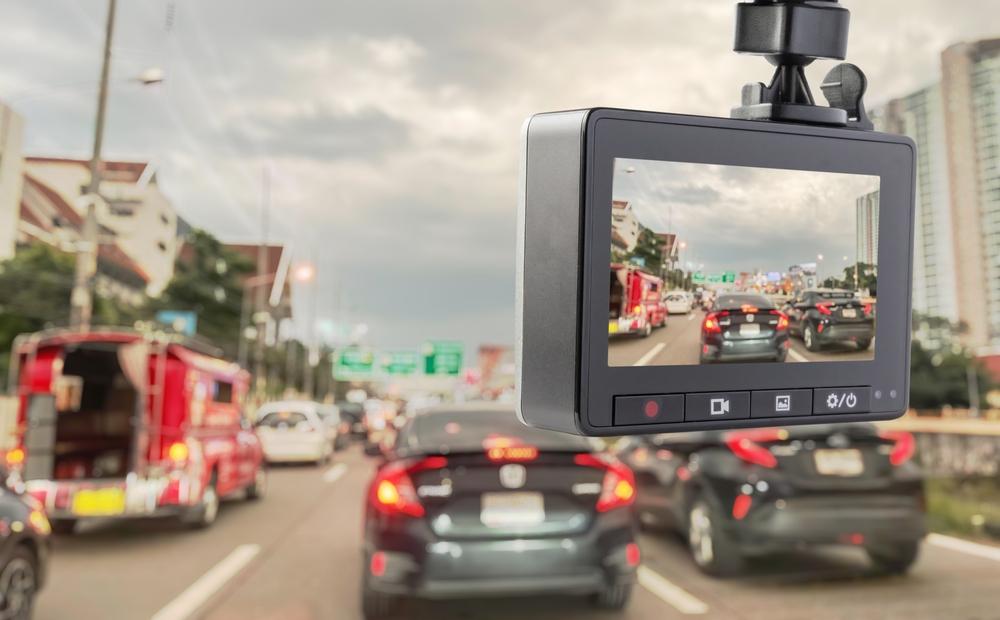
What data GPS dash cams actually record during operation
GPS-enabled dash cams capture a defined set of telemetry that augments video evidence. The data recorded is consistent across most professional-grade systems, though presentation varies by platform.
The following list explains the core data types typically captured alongside video:
- Latitude and longitude coordinates that establish precise vehicle position
- Vehicle speed calculated from positional movement
- Date and time stamps synchronized with satellite time
- Heading or direction of travel expressed as degrees or cardinal direction
- Route history showing movement patterns over time
Each data point is independently meaningful and can be extracted without relying on surrounding footage.
Speed data accuracy depends on movement consistency and satellite lock
Dash cam speed readings are most accurate during steady movement and less precise during abrupt acceleration or deceleration. GPS calculates speed by measuring distance traveled between fixed time intervals. Rapid changes introduce minor lag because speed is averaged across those intervals.
Under normal driving conditions, GPS speed aligns closely with real-world vehicle speed. During short bursts of change, readings may trail actual speed by a small margin, which is expected behavior rather than system failure.
Dash cam location tracking supports incident reconstruction
Location data allows video evidence to be anchored to a verifiable place and time, which strengthens post-incident analysis. When footage includes GPS overlays or metadata, events can be reconstructed with spatial context rather than visual inference alone.
This capability is particularly valuable when visual landmarks are unclear, missing, or disputed. GPS-backed footage removes ambiguity about where an event occurred and how the vehicle was moving at that moment.
GPS overlays versus embedded metadata are not the same thing
Dash cams store GPS data either as visible overlays on the video or as embedded metadata accessible through playback software. Overlays display speed and coordinates directly on the footage. Metadata stores the information separately, preserving a clean video file.
The distinction affects how footage is shared and reviewed. Overlays are immediately visible but permanent. Metadata requires compatible software but allows flexible presentation.
Location and speed tracking raise legitimate privacy considerations
GPS-enabled dash cams introduce privacy responsibilities because recorded location and speed data can identify driver behavior and travel patterns. This is a data governance issue rather than a technical flaw. Clear policies determine how data is accessed, retained, and shared.
Responsible deployment focuses on operational clarity rather than surveillance. Purpose-defined use reduces risk and builds driver trust.
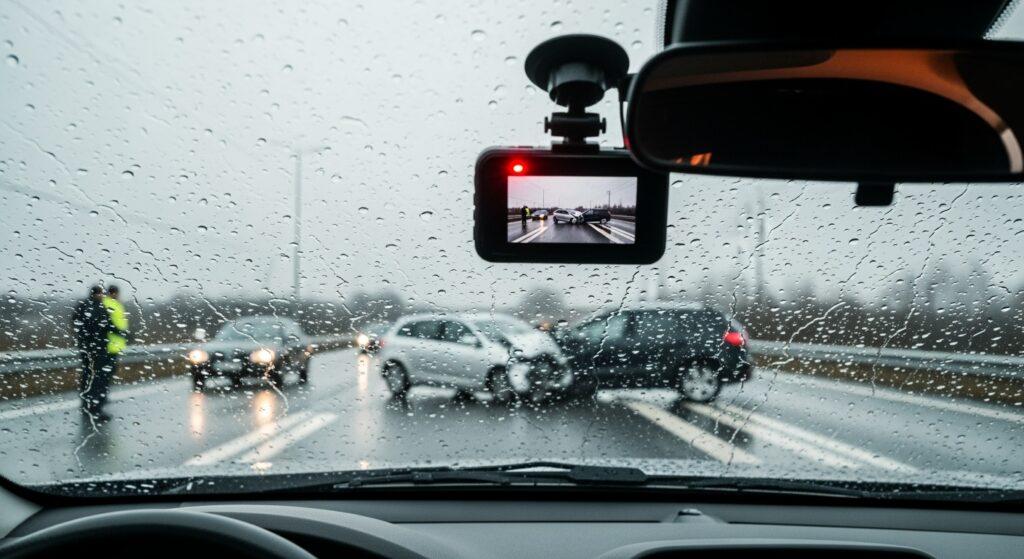
When dash cam GPS data is most valuable in real-world use
GPS tracking provides the most value when location or speed context directly affects interpretation. In other cases, video alone may be sufficient.
The following scenarios benefit most from GPS-enabled footage:
- Collision disputes where speed or positioning is questioned
- Insurance claims requiring objective movement data
- Fleet incident reviews needing route verification
- Driver coaching tied to specific locations or behaviors
- Theft or vehicle recovery where last-known location matters
Each scenario relies on GPS data as an evidentiary anchor rather than a monitoring tool.
Dash cams without GPS cannot infer speed or location reliably
Non-GPS dash cams cannot accurately determine speed or location because video lacks the reference data needed for calculation. Visual estimation based on scenery or motion is subjective and unreliable. Any claimed speed or position without GPS is interpretive, not recorded fact.
This limitation explains why GPS capability is treated as a distinct feature tier rather than a standard expectation.
Cellular-connected dash cams enable real-time location visibility
Dash cams with cellular connectivity transmit GPS data to cloud platforms, allowing near real-time location visibility. This does not improve GPS accuracy but changes accessibility. Location data becomes available immediately rather than after manual retrieval.
Real-time visibility supports operational awareness but is not required for historical review. GPS data exists regardless of transmission timing.
How speed and location data are reviewed after recording
Post-event review depends on the system’s playback environment. Some platforms present GPS data synchronized with video on a map interface. Others allow export of raw telemetry alongside footage.
The review experience influences how efficiently insights are derived. Structured playback reduces interpretation time and preserves evidentiary clarity.
GPS tracking does not replace telematics but can complement it
Dash cam GPS data overlaps with basic telematics functions but does not replicate full vehicle diagnostics. Telematics systems integrate engine data, fuel metrics, and maintenance signals. Dash cams focus on visual and positional context.
Used together, each fills gaps the other cannot. Dash cams explain what happened visually. Telematics explains what the vehicle was doing mechanically.

Environmental factors that affect GPS dash cam performance
GPS accuracy can degrade under specific environmental conditions. These limitations are inherent to satellite-based systems and apply universally.
The following factors influence performance:
- Urban canyons with tall buildings
- Tunnels or enclosed structures blocking satellite view
- Dense tree cover reducing signal clarity
- Severe weather affecting signal quality
- Improper camera placement obstructing antenna reception
Understanding these factors prevents misinterpretation of occasional data gaps.
Why GPS dash cams are common in commercial vehicle deployments
Commercial fleets adopt GPS-enabled dash cams because location and speed context directly support accountability and operational clarity. The goal is not constant tracking but event verification. GPS data allows decisions to be grounded in recorded fact rather than recollection.
This explains why GPS capability is often prioritized in professional-grade systems, including those designed for fleet environments.
Commercial-grade dash cam platforms integrate GPS by default
Many commercial-focused dash cam platforms, including systems offered through CommercialDashCams.com, include GPS as a core capability rather than an add-on. The emphasis is on data reliability, consistent recording, and structured review rather than consumer-style features.
GPS integration is treated as foundational because video without context limits usefulness in professional settings.
Speed tracking is passive and does not control vehicle behavior
Dash cam speed tracking records information but does not intervene in vehicle operation. The system observes and documents rather than regulates. Any behavioral outcomes result from policy decisions made after review, not from the recording itself.
This distinction matters when evaluating the role of dash cams in operational oversight.
GPS data remains intact even if video is partially obstructed
When video visibility is compromised, GPS data can still provide movement context. Position, speed, and time continue to record as long as satellite lock is maintained. This redundancy preserves partial insight when visual evidence alone is insufficient.
The separation of video and telemetry increases overall reliability.
Choosing a dash cam based on GPS needs requires clarity of intent
Selecting a GPS-enabled dash cam depends on whether location and speed context are operationally relevant. The feature adds value when evidence quality matters. It adds complexity when unmanaged.
Clear intent aligns hardware choice with actual use cases rather than assumed benefits.
FAQ’s
Can all dash cams track location and speed?
Only dash cams equipped with built-in or externally connected GPS hardware can track location and speed. Standard dash cams record video only and do not capture positional or speed data. GPS functionality is a hardware requirement, not a software feature.
Key distinction
- GPS-enabled dash cam: Records video plus location and speed data
- Non-GPS dash cam: Records video only
How accurate is dash cam GPS speed data?
Dash cam GPS speed data is generally accurate during consistent driving conditions. Minor delays can occur during sudden acceleration or braking due to GPS signal refresh and data averaging intervals.
Accuracy considerations
- High accuracy at steady speeds
- Slight lag during rapid speed changes
- Dependent on satellite signal quality and update rate
Do dash cams need internet to track location?
No internet connection is required for a dash cam to record location or speed data. GPS data is captured directly from satellites. Internet access only determines whether the data can be uploaded, synced, or viewed remotely in real time.
| Function | Internet Required |
|---|---|
| Record GPS location | No |
| Record vehicle speed | No |
| Live tracking / cloud sync | Yes |
| Remote fleet monitoring | Yes |
Is dash cam location tracking always visible on video?
Not always. Location and speed data may appear as an on-screen overlay or remain embedded as metadata, depending on device settings and playback software.
Common display options
- Visible overlay (speed, coordinates, route)
- Embedded metadata viewable in compatible software
- Optional export for reporting or compliance
Can dash cam GPS data be turned off?
Many GPS-enabled dash cams allow location and speed recording to be disabled through device settings, firmware options, or administrative policies, depending on the manufacturer and platform.
Typical control methods
- In-device settings menu
- Fleet management software
- Admin or policy-level restrictions
Does GPS tracking drain vehicle power?
GPS modules consume minimal power and are engineered for continuous use in automotive environments. Under normal conditions, GPS tracking does not create a meaningful impact on vehicle battery performance.
Are GPS dash cams legal to use?
GPS dash cams are generally legal, but regulations vary by jurisdiction. Legal considerations typically focus on audio recording consent, driver notification, and data privacy, rather than GPS tracking itself.
Common compliance factors
- One-party vs. two-party audio consent laws
- Employee or driver disclosure requirements
- Data retention and privacy policies
Best practice: Always review local laws and implement clear usage policies, especially for commercial or fleet deployments.