

Commercial Dashcams in Texas: Technology, Providers, and Operational Realities
The Commercial Dashcam Landscape in Texas
Commercial dashcams have become a standard component of fleet operations across Texas. Companies adopt them to create a verifiable record of roadway events, support liability defense, monitor driving behavior, and streamline safety oversight. Texas presents a unique environment for this technology because of the state’s vast commercial transportation network, high-density metro traffic, and extended highway routes that run through remote areas. Dashcams give fleets a consistent method of documenting interactions across these varied conditions.
Why Texas Businesses Rely on Commercial Dashcams
Fleet operators throughout the state integrate dashcams to strengthen risk management practices and reduce operational ambiguity. Video evidence allows businesses to review incidents with clarity, especially in congested regions like Dallas–Fort Worth, Houston, San Antonio, and Austin where collisions and near-misses occur frequently. Rural carriers benefit from documented footage during long-haul routes, oilfield operations, and agricultural transport, where limited witnesses make independent verification difficult. Dashcams create continuity across these environments, giving companies a reliable source of truth.
Key Capabilities Businesses Look For in Texas
Dashcam selection in Texas centers on reliability under diverse conditions. Many fleets prioritize:
- Clear video capture at highway speeds, essential on long open stretches of I-10, I-20, I-35, and I-45.
- Night vision for early-morning oilfield operations, overnight delivery work, and long-distance trucking.
- Durability in extended heat exposure, a major concern during Texas summers.
- Stable connectivity in remote regions, especially where coverage fluctuates between major cities.
- Wide-angle lane visibility for urban stop-and-go traffic and multi-lane highway interactions.
- Driver-facing monitoring, used by certain fleets to establish accountability and coaching consistency.
Equipment that performs well in colder northern states often requires additional heat tolerance to remain reliable throughout a Texas summer. Frequent vibration on oilfield and agricultural routes also influences hardware selection, making secure mounting and rugged construction important.
CommercialDashcams.com as a Texas-Focused Dashcam Provider
CommercialDashcams.com has become a central option for Texas fleets seeking dependable video documentation and connected safety equipment. Their systems are built around consistent recording quality, stable connectivity, and durability suited for the state’s wide range of operating environments. Businesses adopt their equipment when they want straightforward hardware that maintains reliable performance in high heat, fluctuating weather, and extended highway use.
The company offers road-facing, dual-facing, and multi-camera configurations that support both light-duty and heavy-duty vehicles. Fleets use these setups to document roadway events, monitor driver activity, and maintain continuity across long-distance or multi-shift operations. LTE-enabled models allow real-time access to footage, giving Texas operators rapid visibility during incidents occurring in dense urban traffic or across remote routes with intermittent coverage.
CommercialDashcams.com also provides cloud-based video storage and GPS-enabled tracking features that help companies organize footage, streamline review processes, and maintain verifiable records for internal evaluations or external claims. Their systems align with the needs of organizations operating in regions such as Dallas–Fort Worth, Houston, San Antonio, Austin, and West Texas, where clear, uninterrupted documentation is an operational priority. Fleets choose their equipment when seeking a balance of video clarity, remote accessibility, and durability tailored to Texas conditions.
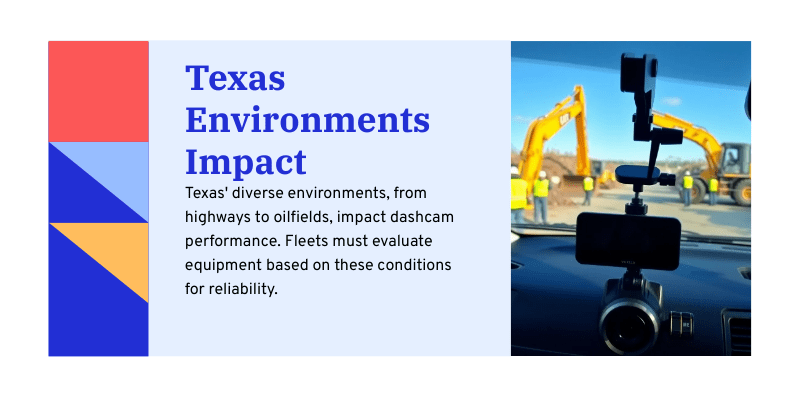
Texas Operating Environments That Influence Dashcam Performance
Texas includes several distinct operational environments, each imposing specific demands on commercial dashcams. Fleets evaluate equipment based on how well it supports these conditions.
Highway Freight Corridors
Long-haul carriers running I-10, I-20, and I-35 face high-speed interactions, rapid lane changes, and extended stretches without nearby services. Dashcams need strong vibration resistance, clear footage at elevated speeds, and reliable cellular fallback connections. Multi-camera systems help record wide-angle highway events.
Urban Traffic Centers
Dallas–Fort Worth, Houston, Austin, and San Antonio experience heavy congestion and close-proximity driving. Dashcams benefit from wider fields of view and high dynamic range to manage rapid lighting changes. Footage clarity is important for reviewing sideswipes, braking patterns, and intersection incidents.
Oilfield and Industrial Routes
West Texas and the Permian Basin present demanding conditions for equipment. Dust, rough roads, constant vibration, and prolonged idle time require reinforced housings and secure mounts. Companies working in these regions often choose hardware designed for harsher mechanical environments.
Suburban and Municipal Fleets
Service vehicles, work trucks, public utility cars, and local contractors operate in mixed traffic environments. These fleets tend to adopt dual-facing systems to capture roadway activity alongside driver interaction during stops, residential service calls, or tight neighborhood maneuvering.
What Texas Businesses Evaluate When Selecting a Dashcam
The selection process focuses on dependable performance under varying circumstances. Fleet managers across the state typically evaluate:
- Recording quality during high heat and sunlight exposure.
- Night and low-light clarity, relevant for construction, delivery, and emergency response.
- Retention and storage architecture, especially when footage must be preserved for legal review.
- Real-time monitoring capabilities, required by companies with active dispatch oversight.
- Integration with existing telematics, valuable for fleets already using GPS or maintenance platforms.
- System expandability, allowing future addition of cargo cameras, side cameras, or rear views.
Texas operators often choose equipment that supports growth, knowing that fleet needs evolve with route changes, contract expansions, and safety program maturity.
How Texas Weather Impacts Dashcam Reliability
Texas weather conditions create significant performance variables for commercial dashcams. Summer temperatures frequently push vehicle interiors to extreme heat levels, especially when trucks sit idle in direct sunlight. Dashcams placed near windshields must withstand prolonged exposure without degrading video quality or experiencing shutdowns. Heat-resistant housings, reliable thermal management, and stable firmware performance become essential traits.
Rapid weather swings also affect visibility. Fleets operating in Central and North Texas encounter intense thunderstorms, high winds, and abrupt low-visibility conditions. Dashcams must maintain clarity during heavy rain, hail encounters, and nighttime storms. Wide dynamic range processing helps preserve detail when headlights reflect off wet pavement or when sudden dark-to-bright transitions occur. These weather factors guide Texas businesses toward equipment designed for fluctuating light and exposure levels.
Connectivity Considerations Unique to Texas Fleets
Dashcams that depend on live streaming or cloud uploads perform differently across the state. Dense metro areas such as Houston and Dallas offer consistent LTE coverage, enabling fleets to review footage in real time. Rural regions, including the Panhandle, West Texas, and certain South Texas routes, may experience sporadic connectivity. Fleets operating in these areas often choose systems that buffer recordings locally and upload footage once a stable connection returns.
For companies maintaining mixed urban–rural operations, adaptive connectivity matters. Dashcams with intelligent upload timing reduce failed transmission attempts and preserve battery life in auxiliary hardware. Operators also evaluate antenna strength and system power consumption, especially for vehicles that remain parked for extended periods. The goal is continuous documentation without interruptions tied to network variability.

The Role of Dashcams in Texas Liability Protection
Dashcams serve as a critical tool in clarifying incident responsibility. Texas’s high-volume freight corridors see frequent collisions, and video footage offers a verifiable record that helps businesses present accurate accounts of roadway events. Video evidence reduces disputes over lane changes, braking behavior, and vehicle positioning during multi-vehicle interactions. Fleets use dashcams to protect drivers from false claims and present factual reconstructions during insurance evaluations.
In urban environments like Dallas–Fort Worth and Houston, where aggressive merges, tight interchanges, and dense traffic create complex scenarios, dashcams help identify the specific chain of events leading to an incident. For municipal and service fleets, video captures interactions near job sites, residential neighborhoods, or customer locations. Across the state, operators rely on footage to validate operational decisions and document compliance with training standards.
Dashcams for Oilfield, Construction, and Industrial Equipment
Texas’s industrial sector uses dashcams not only in standard vehicles but also in heavy-duty and specialty equipment. Oilfield trucks, pipeline support vehicles, large construction haulers, and mining transport equipment frequently incorporate multi-camera views. These systems record conditions near loading areas, verify safe entry and exit from industrial sites, and capture vehicle interactions in off-road environments.
Industrial-grade dashcams designed for vibration-heavy operations offer reinforced mounts and shock-resistant components. They maintain stable recording even when equipment travels across unpaved roads or uneven terrain. Texas businesses in these sectors use dashcams to verify compliance with site safety procedures and track vehicle behavior in areas where oversight is limited.
Texas Cities Where Commercial Dashcams Are Most Common
Commercial dashcam adoption aligns with regions that experience high traffic volumes, industrial activity, or frequent commercial vehicle movement. Texas businesses search for dashcams in concentrated pockets where fleet operations are most active.
Common areas where demand is particularly strong include:
- Dallas: High freight movement, service fleets, dense urban driving, and consistent commercial traffic.
- Fort Worth: Major distribution hubs and mixed industrial routes.
- Houston: Petrochemical industry operations, port traffic, and heavy truck density.
- Austin: Rapid population growth, significant service fleet expansion, and busy arterial roads.
- San Antonio: Logistics routes and regional delivery fleets.
- El Paso: Border traffic, long-haul routes, and multi-lane interstate activity.
- Midland–Odessa: Oilfield transport vehicles operating in challenging environments.
- Waco, Katy, Round Rock, Lewisville, and The Woodlands: Fast-growing commercial corridors with elevated demand for installation services.
Businesses in these areas often work with local installers or fleet service providers to handle professional dashcam mounting and system integration.
Hardware Configurations Commonly Used in Texas
Fleets choose hardware configurations based on risk exposure and operational needs.
Single Front-Facing Dashcams
Used by smaller fleets, municipal vehicles, sales vehicles, and solo operators. They record the roadway ahead and document traffic interactions. They are often selected for lighter-duty vehicles or when basic documentation is the primary requirement.
Dual-Facing Dashcams
Common among service fleets, rideshare groups, and operations requiring both external and internal accountability. These cameras handle incidents involving driver behavior, cabin interactions, or customer-related events.
Multi-Camera and 360° Configurations
Large trucking companies, oilfield operators, and high-risk fleets frequently adopt setups with side, rear, and cargo cameras. This configuration captures events around the entire vehicle and offers greater clarity in congested or off-road environments.
LTE-Connected Dashcams
Used by businesses that require real-time visibility. LTE systems allow managers to review footage quickly following a reported incident. These systems are common in regional carriers, urban fleets, and companies that maintain centralized dispatch operations.
SD-Based or Local Storage Dashcams
Used when constant remote connectivity is unnecessary. They are installed in environments with inconsistent cellular coverage or by operators who prefer on-demand footage retrieval.
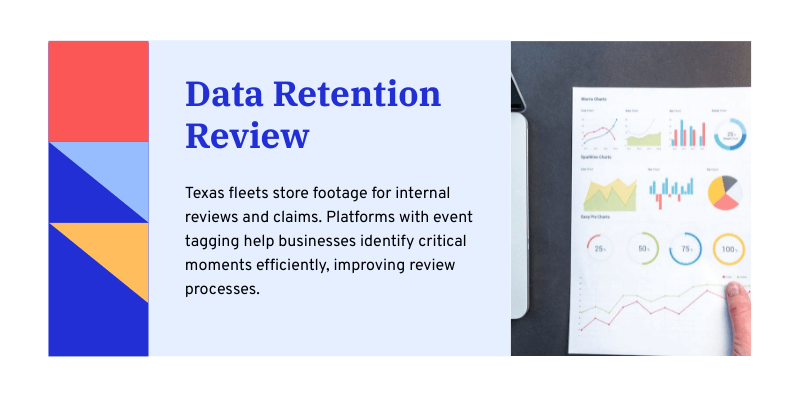
How Texas Fleets Approach Data Retention and Review
Texas fleets evaluate storage based on how long footage must remain available for internal analysis or claims review. Companies handling regular incident investigations prefer cloud storage with longer retention windows. Rural operators sometimes use hybrid models that combine onboard storage with periodic cloud uploads when the vehicle returns to a service area.
Dashcam platforms with automated event tagging help Texas businesses identify critical moments without reviewing hours of footage. Operators use g-force triggers, braking events, and driver behavior markers to pinpoint relevant clips. This improves review efficiency, particularly in fast-moving logistics operations.
Operational Benefits Observed Across Texas Fleets
Texas fleets identify several consistent advantages after implementing commercial dashcams:
- Clear resolution of disputes during insurance claims or customer inquiries.
- Protection against inaccurate allegations, particularly in dense cities or high-speed corridors.
- Improved driver accountability through documented behavior patterns.
- Faster oversight response when vehicles operate across distant regions.
- Better operational transparency for long-haul or multi-shift operations.
These benefits support a more stable operational structure, especially for companies managing geographically dispersed routes.
Operational Patterns That Increase Dashcam Usage in Texas
Certain operational patterns across Texas lead businesses to rely more heavily on dashcams. Companies with dispersed routes, frequent customer interactions, or high driver turnover often adopt video-based oversight to maintain consistency. Delivery vehicles navigating mixed residential and urban areas use dashcams to document close-proximity interactions, unexpected maneuvers by third parties, or incidents near driveways and parking lots. Service vehicles operating on customer property use footage to validate arrival times, parked positioning, and site conditions.
Long-haul trucking operations crossing the state rely on continuous video because roadway conditions vary widely along interstate corridors. Traffic density can shift abruptly near major metro areas, making documentation valuable for identifying how conditions contributed to a roadway event. Oilfield operators use dashcams to monitor movement near active sites, where uneven terrain and restricted pathways increase the likelihood of minor incidents. These patterns reflect the diversity of Texas operations and highlight why dashcams have become an essential layer of visibility.
Integration With Texas Fleet Workflows
Dashcams become most effective when integrated into existing workflow structures. Texas fleets often synchronize video systems with their dispatching, maintenance, or compliance processes. For fleets managing wide operational spans—such as couriers, commercial contractors, and regional carriers—dashcam platforms provide shared access for supervisors, dispatchers, and safety personnel. This centralization enables consistent oversight even when operations involve multiple facilities or remote job sites.
Companies with incident review protocols use dashcam footage as part of their standard evaluation steps. Footage helps determine whether drivers adhered to company policies, followed mandated routes, or responded appropriately to changing road conditions. Maintenance teams sometimes use footage to identify vehicle issues, such as loose cargo doors or recurring obstacles along routes. The inclusion of video data in these workflows allows Texas fleets to make decisions based on verifiable information rather than assumptions or informal accounts.

Differences Between Texas Fleets and Other Regions
Texas fleets operate under conditions that differ significantly from many other parts of the country. Vehicles often cover hundreds of miles in a single shift, moving between dense urban areas, open highways, and remote regions. Dash cams play an important role in maintaining consistent oversight as operating environments change throughout the day.
Heat tolerance is a more critical requirement in Texas than in moderate climates. Vehicle interiors regularly reach extreme temperatures during summer months, placing stress on camera hardware. Systems that perform reliably elsewhere may require additional heat resistance to maintain stability and continuous recording under these conditions.
Texas fleets also engage in more mixed-surface and off-road operations than many regions. Industries such as oilfield services, agriculture, and construction operate on unpaved roads where vibration, dust, and extended idling are common. Dash cam systems used in these environments must withstand harsher handling while continuing to record without interruption.
Dash Cam Adoption by Fleet Size in Texas
Dash cam usage varies by fleet size, but Texas businesses across all segments rely on video for documentation and accountability.
Small and Independent Fleets
Small fleets and owner-operators typically deploy single or dual-facing dash cam systems. These setups capture essential roadway activity and are well suited for vehicles operating in metro areas where close-range interactions are frequent. Dash cams provide smaller businesses with a clear record that supports insurance reviews, customer disputes, and incident clarification.
Midsize Regional Fleets
Midsize fleets operating local and regional routes often adopt more advanced systems. Remote footage access and automated event alerts allow supervisors to respond quickly to incidents without waiting for vehicles to return to base. These capabilities support more proactive safety oversight and faster decision-making.
Large and Multi-State Fleets
Large fleets, including long-haul and multi-state operators, frequently deploy multi-camera configurations. Side, rear, and interior cameras help document highway passing events, wide-lane interactions, and extended driving periods common along Texas interstate corridors. Camera selection is typically driven by risk exposure, regulatory requirements, and the need for synchronized fleet-wide visibility.
Maintenance and Longevity in Texas Operating Conditions
Texas weather and road conditions influence how fleets maintain dash cam systems. Prolonged heat, direct sun exposure, and uneven surfaces can accelerate wear on mounts, adhesives, and wiring. Fleets perform routine inspections to ensure cameras remain securely mounted and properly aligned.
Maintenance checks often include:
- Verifying lens clarity and housing integrity
- Inspecting cables for heat or vibration damage
- Confirming mounts remain stable over time
Systems that use SD cards require periodic replacement to prevent data corruption. Fleets using LTE or cloud-based platforms monitor upload activity to confirm that footage is consistently stored and accessible. Safety and maintenance teams coordinate to ensure video retention settings align with operational and compliance needs.
Camera Angle Coverage for Texas Routes
Texas roadways range from high-speed interstates to narrow access roads at industrial and worksite locations. Fleets select camera angles that provide practical visibility across these varied environments.
Front-facing cameras document roadway conditions, traffic flow, and lane behavior at highway speeds. Driver-facing cameras are used to review distraction-related events or verify internal compliance during incidents.
Side and rear cameras are especially valuable for fleets operating in dense urban centers, industrial yards, or delivery zones. These angles capture wide turns, backing maneuvers, and interactions in tight spaces. Texas’s mix of suburban development, industrial corridors, and long-distance highways makes multi-angle coverage a practical choice for fleets seeking comprehensive situational awareness.
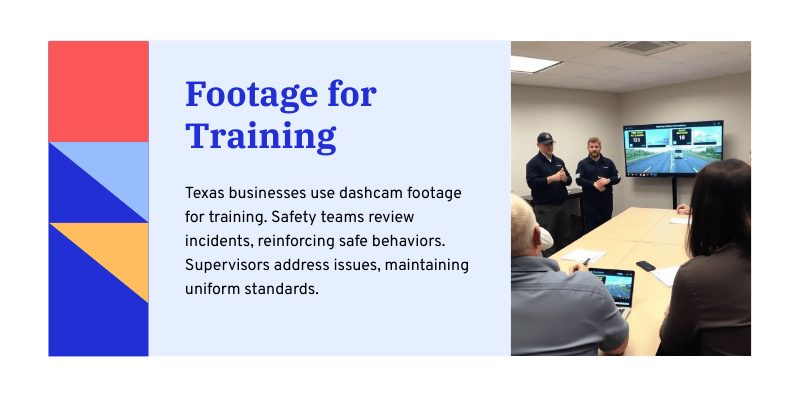
How Texas Fleets Use Footage for Training and Development
Dashcam footage provides Texas businesses with a consistent resource for training and coaching. Safety teams review real incident footage to strengthen onboarding programs, highlighting real-world examples of safe driving behaviors or risky patterns. Companies with seasonal or temporary workers use footage to reinforce expectations during high-turnover periods.
Footage also helps supervisors identify situational awareness lapses, improper following distance, or inefficient route choices. By referencing recordings during coaching sessions, trainers create more actionable guidance that reflects actual operational conditions. Texas fleets often use this method to maintain uniform standards across large or decentralized operations, where direct observation is not always feasible.
How Dashcams Support Compliance in Texas-Regulated Industries
Certain Texas industries operate under strict safety guidelines, and dashcams help document vehicle activity during regulated tasks. Utility operators, construction companies, and pipeline service vehicles often record movement on and off restricted sites. Footage provides clarity on whether vehicles followed site-specific entry and exit procedures or navigated designated paths properly.
Some companies incorporate dashcam footage into their internal compliance audits. This helps verify whether drivers adhered to company safety rules or observed speed expectations on private roads. Dashcams serve as a standardized record that reduces ambiguity during audits, inspections, or internal performance evaluations.