
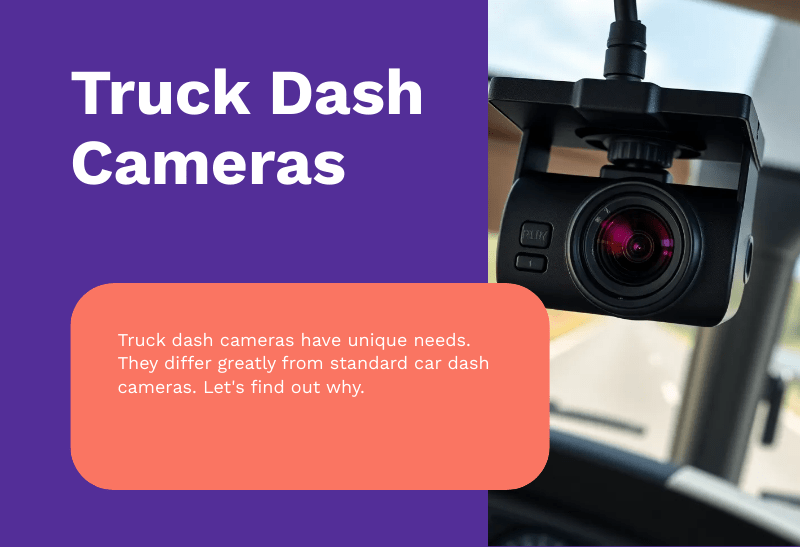
Dash Cameras for Trucks Aren’t One-Size-Fits-All
Dash cameras for trucks are not interchangeable because truck operations impose demands that consumer and light-vehicle cameras are not designed to handle. Differences in vehicle size, duty cycle, ownership structure, and liability exposure fundamentally change what a camera system must do to remain useful over time. A camera that performs adequately in a passenger vehicle often fails once exposed to long runtimes, vibration, temperature extremes, and commercial accountability requirements.
Truck environments introduce variables that reshape the role of video from a passive recording tool into an operational system. Evidence integrity, uptime reliability, and data accessibility become core requirements rather than optional features. These expectations explain why a single definition of a “truck dash camera” does not hold across use cases.
Vehicle size and geometry reshape camera effectiveness
Truck dimensions alter sightlines, blind spots, and mounting constraints in ways that directly affect camera performance. Windshield placement, hood length, trailer articulation, and cab height change how lenses capture usable footage. A camera positioned for a sedan often fails to capture actionable detail when installed in a truck cab.
The physical layout of trucks also increases the need for multi-angle coverage rather than a single forward-facing view. Side lanes, trailer swing, loading zones, and cab interiors introduce risk areas that front-only cameras cannot document reliably.
Common geometry-driven challenges include:
- Forward cameras missing close-range incidents due to hood length
- Rear cameras failing to capture trailer-related events
- Side impacts occurring outside narrow field-of-view lenses
- Interior cameras struggling with glare and lighting imbalance
These constraints explain why camera placement and lens selection matter more in trucks than in smaller vehicles.
Duty cycles determine whether a camera survives or degrades
Truck dash cameras operate for longer hours and under harsher conditions than most consumer devices. Continuous daily operation exposes weaknesses in power management, heat tolerance, and storage reliability. Cameras designed for intermittent use often degrade rapidly when subjected to sustained runtime.
Extended idling, overnight parking, and multi-shift operation also stress battery-backed systems. Devices that rely on internal batteries or low-grade components experience premature failure or corrupted footage.
Operational stress factors unique to trucking include:
- High interior temperatures during summer months
- Cold-start conditions in winter climates
- Continuous vibration from long-haul driving
- Power fluctuations during engine cycling
A camera that cannot maintain consistent performance under these conditions becomes a liability rather than an asset.
Ownership models change how dash cameras are evaluated
Dash camera requirements differ significantly between owner-operators, small fleets, and enterprise operators. Ownership structure affects installation responsibility, data access expectations, and maintenance tolerance. A system that works for a single vehicle may not scale across dozens or hundreds of trucks.
Owner-operators often prioritize simplicity and portability, while fleets require centralized oversight and standardization. These differences influence whether a camera is treated as a personal accessory or as shared operational infrastructure.
Ownership-driven evaluation criteria typically differ across:
- Installation permanence versus portability
- Centralized versus local video access
- Manual versus automated maintenance
- Individual versus organizational liability management
These factors prevent a universal camera solution from meeting every trucking context.
Evidence standards differ between recording and accountability
Dash cameras for trucks must often meet higher standards for evidentiary reliability than consumer cameras. Footage may be used in insurance claims, regulatory reviews, or internal investigations. Gaps in recording, unclear timestamps, or incomplete event context reduce the value of captured video.
Consumer cameras frequently prioritize resolution and price over metadata integrity. In trucking environments, consistent time synchronization, GPS correlation, and secure storage are more critical than raw image quality alone.
Evidence-grade video typically requires:
- Reliable timestamps tied to vehicle movement
- Secure storage that prevents overwriting key events
- Clear chain-of-custody controls
- Contextual data such as speed and location
Without these elements, footage may fail to support operational or legal decisions.
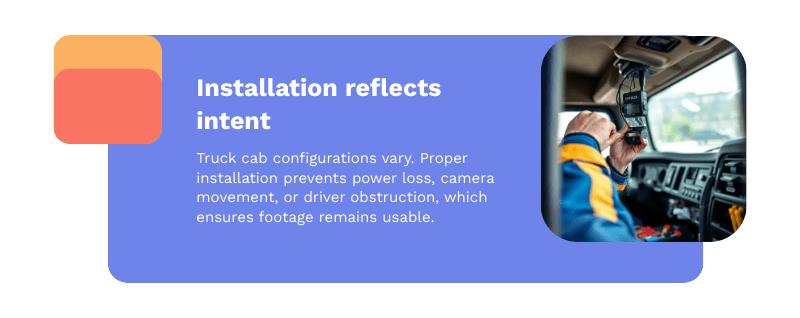
Installation complexity reflects system intent
Claims of universal installation often overlook the realities of truck cab configurations. Wiring routes, fuse access, and mounting surfaces vary widely across truck models and ages. Improper installation increases the risk of power loss, camera movement, or driver obstruction.
Cameras designed for trucks typically account for these variations through flexible mounting options and power management strategies. Simpler devices may rely on assumptions that do not hold once installed in commercial vehicles.
Installation considerations that affect long-term performance include:
- Secure mounting that withstands vibration
- Power sourcing that avoids drain or interruption
- Cable routing that does not interfere with controls
- Compliance with visibility regulations
Installation quality directly influences whether footage remains usable over time.
Single-camera setups limit situational awareness
Trucks introduce risk scenarios that extend beyond the forward roadway. Lane changes, dock approaches, and in-cab behavior all contribute to incidents that front-only cameras cannot capture. Single-camera systems often miss the context needed to understand what occurred.
Multi-camera configurations address these gaps by covering blind spots and interior activity. While not required in every scenario, additional angles significantly increase situational awareness in complex environments.
Common coverage gaps in single-camera setups include:
- Side-swipes during lane changes
- Trailer contact during turns
- In-cab distractions or disputes
- Docking and yard incidents
These blind spots explain why camera count and placement matter more in trucks than in cars.
Data access expectations separate devices from systems
Truck operators often need timely access to video to respond to incidents, coach drivers, or resolve disputes. Devices that require manual retrieval or physical access delay response and reduce usefulness. Centralized access changes how video supports operations.
Systems designed for trucks typically emphasize accessibility and organization over standalone recording. Video becomes part of a broader operational workflow rather than an isolated file stored on a memory card.
Operational access requirements often include:
- Remote retrieval without vehicle downtime
- Event-based tagging for quick review
- Role-based access controls
- Retention policies aligned with business needs
These requirements move dash cameras beyond simple recording devices.
Regulatory exposure amplifies camera requirements
Trucking operations face higher regulatory scrutiny than personal vehicles. Safety audits, compliance reviews, and incident investigations increase the stakes of recorded footage. Cameras must align with regulatory expectations around visibility, privacy, and data handling.
Cameras not designed with these considerations may introduce compliance risk rather than reducing it. Privacy management, consent policies, and data retention practices all influence whether a camera system supports or complicates compliance.
Regulatory-sensitive considerations include:
- Interior recording policies
- Driver notification and consent
- Data retention limits
- Visibility obstruction rules
These factors vary by jurisdiction and operation type, reinforcing the need for fit-specific solutions.
Environmental exposure accelerates hardware failure
Trucks operate in environments that challenge consumer-grade electronics. Dust, moisture, and vibration degrade components over time. Cameras mounted externally or near open doors face additional exposure.
Hardware designed for trucking environments typically accounts for these risks through reinforced housings and sealed connections. Devices lacking these protections experience higher failure rates and inconsistent recording.
Environmental risks that affect camera longevity include:
- Dust intrusion in construction or agricultural routes
- Moisture exposure during loading and unloading
- Constant vibration on rough roads
- Temperature cycling across climates
Durability becomes a defining factor rather than a secondary consideration.
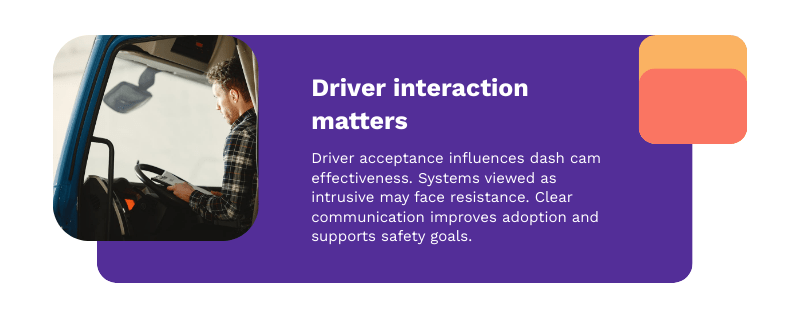
Driver interaction changes system effectiveness
Driver acceptance influences whether dash cameras function as intended. Systems perceived as intrusive or unreliable often face resistance or misuse. Clear purpose, transparency, and consistent performance improve adoption.
Cameras that frequently malfunction or generate false alerts erode trust. In contrast, systems that integrate smoothly into daily operations tend to be viewed as protective rather than punitive.
Factors influencing driver acceptance include:
- Camera reliability and stability
- Clear communication of use policies
- Minimal interference with driving
- Consistent behavior across vehicles
Acceptance affects whether cameras support safety goals or create friction.
Consumer pricing distorts expectations in trucking contexts
Retail pricing visible in search results often creates unrealistic expectations for truck camera systems. Low-cost devices appear attractive but rarely account for operational requirements. The gap between purchase price and total cost of ownership becomes apparent over time.
In trucking environments, downtime, replacement frequency, and administrative effort contribute to true cost. A camera that fails repeatedly or produces unusable footage imposes hidden expenses.
Cost considerations extend beyond upfront price to include:
- Replacement frequency
- Installation labor
- Data retrieval time
- Incident resolution delays
Evaluating cameras without considering these factors leads to mismatched decisions.
Dash cameras evolve into operational infrastructure
In trucking operations, dash cameras increasingly function as infrastructure rather than accessories. Video integrates with safety programs, training processes, and incident management. This shift changes how cameras are selected and maintained.
Systems designed for infrastructure use emphasize reliability, scalability, and integration. The camera becomes one component of a broader operational environment.
Infrastructure-oriented characteristics often include:
- Consistent deployment across vehicles
- Centralized oversight
- Predictable performance
- Alignment with operational workflows
This evolution explains why one-size-fits-all solutions fail to meet trucking needs.
Commercial-grade systems reflect these operational realities
Commercial-grade dash camera systems are built around the demands of trucking rather than adapted from consumer products. These systems treat video as operational data with defined access, retention, and reliability standards. The focus shifts from recording footage to supporting decisions.
Platforms such as CommercialDashcams are structured around managed deployment and long-term performance rather than single-device ownership. This approach aligns with the operational realities described throughout trucking environments.
The distinction lies not in marketing language but in design assumptions about how cameras will be used and maintained.
Selection depends on operational context, not feature lists
Choosing a dash camera for trucks requires understanding the specific operational context rather than comparing generic feature lists. Factors such as route type, vehicle mix, and incident exposure shape what matters most.
A system suitable for local delivery differs from one required for long-haul operations. Context determines whether portability, durability, or centralized access carries more weight.
Key contextual questions that influence suitability include:
- How many hours per day will the camera operate
- Who needs access to footage and how quickly
- What incidents are most common
- How often vehicles change drivers or routes
Answers to these questions guide selection more effectively than generalized rankings.
Misalignment leads to predictable failure patterns
When dash cameras are selected without accounting for trucking realities, failure patterns repeat. Devices overheat, footage gaps appear, and retrieval becomes impractical. These outcomes are not random but structural.
Recognizing these patterns helps explain why dissatisfaction persists despite abundant options. The issue lies less with individual products and more with mismatched expectations.
Understanding these dynamics reduces the likelihood of repeating the same mistakes.
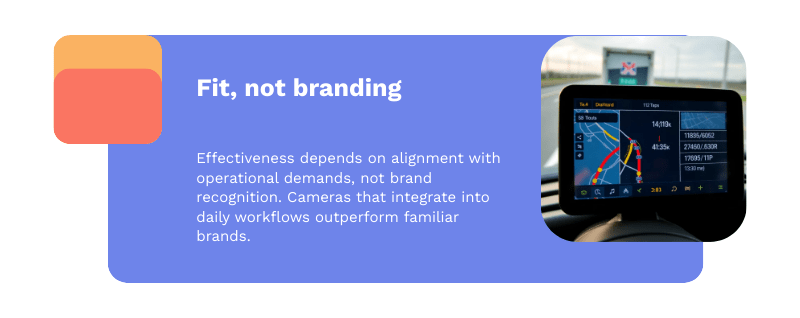
Dash camera effectiveness emerges from fit, not branding
Brand recognition and retail availability often influence purchasing decisions, but they do not determine suitability in trucking environments. Effectiveness depends on alignment with operational demands rather than name recognition.
Cameras that integrate seamlessly into daily workflows outperform those chosen for familiarity alone. Fit determines longevity and usefulness.
This principle reinforces the idea that no single solution applies universally across truck operations.
Frequently Asked Questions
What makes dash cameras for trucks different from car dash cams?
Dash cameras for trucks must handle longer runtimes, harsher environments, and higher evidentiary standards than car dash cams. These differences require stronger hardware, better power management, and more reliable data handling.
Do trucks need more than one dash camera?
Many truck operations benefit from multiple cameras because incidents often occur outside the forward view. Side, rear, or interior coverage provides context that single-camera setups cannot capture.
Can consumer dash cams work in trucks?
Consumer dash cams may function temporarily but often fail under sustained trucking conditions. Heat, vibration, and extended operation expose limitations not encountered in personal vehicles.
Are dash cameras required for trucking compliance?
Dash cameras are not universally required, but they are often used to support safety programs and incident documentation. Regulatory expectations influence how footage is captured and retained.
How important is installation quality for truck dash cameras?
Installation quality directly affects reliability and footage usability. Poor mounting or power sourcing leads to interruptions and degraded performance.
Do dash cameras help reduce liability in trucking?
Dash cameras can support liability management when footage is reliable and accessible. Inconsistent recording or missing context reduces their effectiveness.
Should owner-operators and fleets use the same dash camera systems?
Owner-operators and fleets have different needs related to access, maintenance, and oversight. Systems should be selected based on ownership structure and operational scale.