
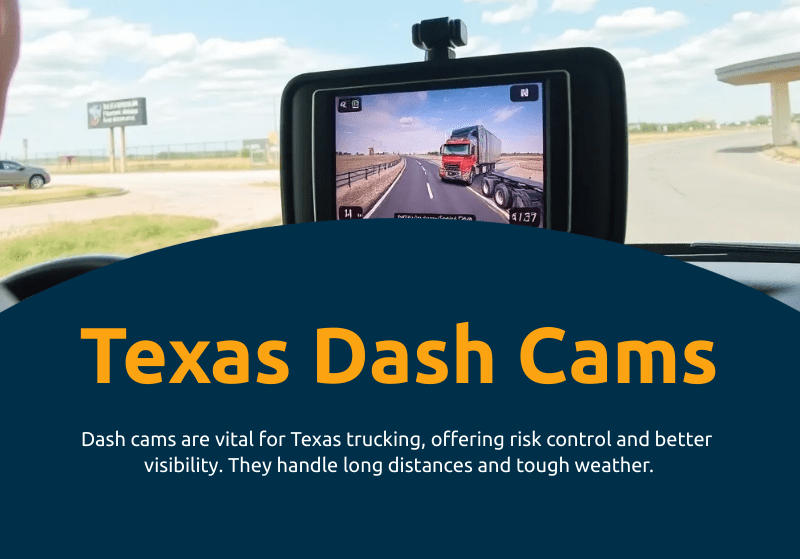
Dash Cams for Texas Trucking Companies: Compliance, Safety, ROI
What dash cams represent in Texas trucking operations
Dash cams represent a risk-control and visibility layer that documents roadway events, driver behavior, and environmental context across Texas freight corridors. Texas fleets operate across long distances, mixed urban–rural routes, and extreme weather, which increases exposure to claims and operational blind spots. Video evidence converts uncertainty into verifiable facts that can be reviewed internally and defended externally.
Dash cam adoption in Texas trucking reflects operational necessity rather than novelty. Fleets face dense metro traffic, oilfield service roads, border-adjacent corridors, and severe weather patterns that complicate incident analysis. Video data provides a consistent, objective record that supports safety governance and post-incident resolution.
Why Texas trucking environments change dash cam requirements
Texas trucking environments impose unique technical and operational demands on dash cam systems. Long-haul mileage, heat exposure, and route diversity stress both hardware reliability and data workflows. Systems must operate continuously without creating driver distraction or excessive administrative load.
Operational realities across Texas include extended idle times, overnight parking, and remote stretches with limited connectivity. Dash cam solutions must buffer footage locally, manage uploads efficiently, and remain stable in high-temperature cabins. Fleets that select systems without accounting for these conditions often experience data gaps or maintenance friction.
Legal and liability implications specific to Texas fleets
Dash cam footage directly affects liability posture under Texas negligence standards. Clear video evidence can resolve fault disputes quickly, reducing litigation timelines and settlement uncertainty. Fleets gain leverage by presenting objective records rather than relying on conflicting witness accounts.
Texas trucking companies also benefit from dash cams during insurance renewals and claims negotiations. Insurers assess risk based on loss history and safety controls, and video-backed incident reviews strengthen underwriting discussions. Consistent footage availability supports early claim resolution and mitigates nuclear verdict exposure.
Operational safety outcomes tied to dash cam usage
Dash cams reinforce safety culture by making driving behavior visible and reviewable. Drivers adjust habits when accountability mechanisms are consistent and clearly communicated. Fleets see fewer high-risk maneuvers and improved compliance with internal safety standards.
Safety improvements emerge through targeted coaching rather than blanket discipline. Managers can isolate specific behaviors and deliver corrective feedback with visual context. This precision reduces friction between drivers and supervisors while sustaining measurable safety gains.
How dash cams influence driver accountability without micromanagement
Dash cams establish objective accountability that reduces subjective judgment. Drivers understand expectations when video criteria are transparent and consistently applied. This clarity supports trust rather than surveillance-driven tension.
Accountability frameworks work best when footage is reviewed selectively. Fleets that focus on incidents, exceptions, or safety triggers avoid unnecessary monitoring. Balanced policies preserve driver autonomy while protecting organizational risk exposure.
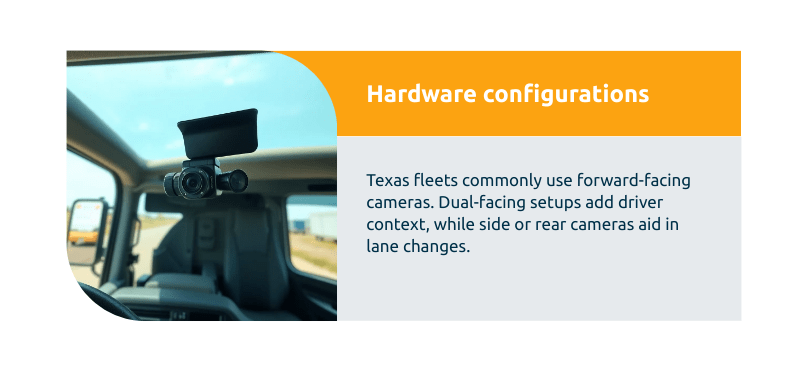
Hardware configurations that suit Texas trucking fleets
Dash cam hardware configurations must align with fleet size, route complexity, and cargo risk. Texas fleets commonly deploy forward-facing cameras to document roadway events. Dual-facing setups add interior context for distraction and compliance monitoring.
The following list outlines common camera configurations and their operational value:
- Single forward-facing cameras capture roadway conditions and external hazards
- Dual-facing cameras document both road events and driver behavior
- Side or rear cameras support lane-change and trailer visibility in urban routes
- High-temperature rated units withstand prolonged Texas heat exposure
- Wide dynamic range lenses handle glare and low-light transitions
- Local storage with cloud sync ensures footage continuity in low-connectivity zones
Hardware selection should prioritize reliability over feature density. Systems that fail under heat or vibration undermine the entire safety investment.
Video resolution and frame rate considerations for fleet use
Video resolution determines evidentiary usefulness rather than visual appeal. Footage must clearly identify lane markings, vehicle positions, and traffic signals. Excessively high resolution increases storage costs without proportional operational benefit.
Frame rate selection balances motion clarity with data efficiency. Smooth playback helps reviewers interpret events accurately. Fleets benefit most from configurations that preserve critical details while maintaining manageable data volumes.
Data storage, retention, and access control realities
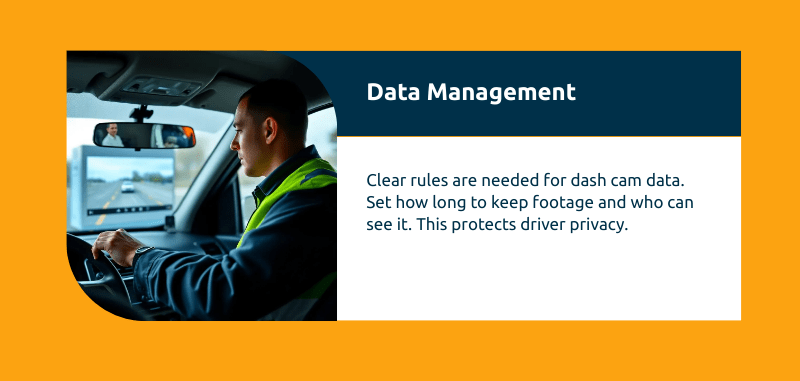
Dash cam programs succeed when data governance is clearly defined. Texas fleets must establish retention periods aligned with legal exposure and operational needs. Indefinite storage increases liability risk and administrative overhead.
Access controls protect driver privacy and limit internal misuse. Only authorized personnel should retrieve or distribute footage. Structured permissions reduce compliance risk while maintaining operational responsiveness.
Connectivity challenges across Texas routes
Connectivity variability affects footage availability and review speed. Texas routes span dense metros, oilfields, border regions, and rural highways. Dash cam systems must function reliably despite inconsistent cellular coverage.
Buffered uploads and intelligent compression mitigate connectivity gaps. Fleets avoid data loss by selecting platforms that prioritize local recording and delayed synchronization. Connectivity resilience ensures footage integrity regardless of route geography.
Integration with fleet safety and telematics programs
Dash cams deliver maximum value when integrated with broader fleet systems. Video data complements telematics metrics such as speed, braking, and idle time. Combined insights support more accurate risk assessments.
Integration reduces administrative duplication. Safety managers access consolidated dashboards rather than switching between platforms. This efficiency accelerates incident review and improves decision quality.

Coaching workflows that convert footage into safer driving
Effective coaching workflows transform video into behavioral improvement. Footage alone does not change outcomes without structured review processes. Fleets should define clear triggers for review and standardized feedback protocols.
The following elements support productive coaching programs:
- Event-based review thresholds that prioritize high-risk incidents
- Consistent evaluation criteria applied across all drivers
- Private feedback sessions that respect driver professionalism
- Documented improvement plans tied to specific behaviors
- Follow-up reviews to confirm corrective action effectiveness
Coaching programs succeed when drivers view footage as a development tool rather than a punitive mechanism.
Insurance and claims management advantages
Dash cams reduce claim uncertainty by providing immediate context. Insurers value objective evidence that clarifies fault and accelerates resolution. Fleets benefit from fewer disputed claims and lower legal costs.
Claims teams rely on video to counter fraudulent allegations. Footage that documents safe driving behavior protects drivers and companies alike. Over time, reduced claim severity strengthens insurer relationships.
Regulatory awareness without regulatory overreach
Dash cams support compliance awareness without creating new regulatory burdens. Footage helps fleets verify adherence to internal policies and roadway laws. Programs remain effective when they avoid excessive monitoring that distracts from core operations.
Texas fleets must communicate dash cam policies clearly. Drivers should understand what is recorded, how footage is used, and how privacy is protected. Transparency prevents misunderstanding and supports adoption.
Privacy considerations for drivers and third parties
Privacy considerations shape program acceptance and legal defensibility. Interior-facing cameras raise additional sensitivity that requires explicit policy language. Fleets must articulate legitimate safety purposes for recording.
Third-party privacy concerns also matter. Footage should be shared externally only when necessary. Controlled distribution protects both drivers and the organization from unintended exposure.
Cost structures and return on investment logic
Dash cam ROI emerges through risk reduction rather than revenue generation. Fleets realize value through fewer claims, faster resolutions, and safer driving behavior. Hardware costs represent a predictable expense against unpredictable liability exposure.
The following factors influence total program cost:
- Hardware acquisition and installation
- Monthly data and platform subscriptions
- Administrative review time
- Training and policy development
- System maintenance and replacement
ROI calculations should consider avoided losses rather than direct savings. Video evidence often prevents costs that never appear on financial statements.
Scaling dash cam programs across growing fleets
Scalability determines long-term viability. Texas fleets expand rapidly in response to demand fluctuations. Dash cam systems must accommodate vehicle additions without complex reconfiguration.
Centralized management platforms simplify scaling. Fleets benefit from standardized installations, uniform policies, and consistent reporting across terminals. Scalable systems prevent fragmentation as operations grow.
Incident response speed and decision clarity
Dash cams accelerate incident response by eliminating speculation. Managers review footage immediately rather than reconstructing events from memory. Faster clarity supports timely communication with insurers and legal counsel.
Rapid access to footage reduces internal disruption. Teams move forward with confidence rather than prolonged investigation. This decisiveness preserves operational momentum after incidents.
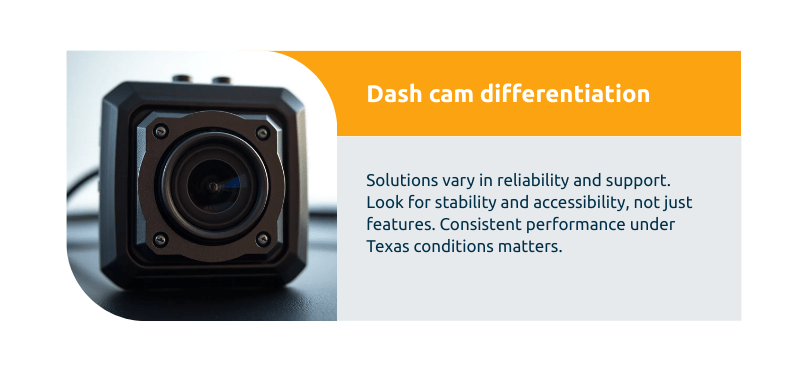
Differentiating dash cam solutions in the marketplace
Dash cam solutions vary widely in reliability, usability, and support. Feature lists alone do not predict operational success. Fleets must evaluate how systems perform under real-world Texas conditions.
Differentiation emerges through stability, support responsiveness, and data accessibility. Fleets prioritize platforms that deliver consistent performance over novelty features. Dependability remains the defining factor.
Why implementation quality outweighs hardware selection
Implementation quality determines program success more than camera specifications. Poor installations cause downtime, driver frustration, and data gaps. Fleets must ensure consistent mounting, calibration, and testing.
Training reinforces proper use and expectations. Drivers and managers should understand system purpose and workflows. Strong implementation builds trust and reduces resistance.
When forward-only cameras are sufficient
Forward-only cameras suffice when primary risk lies in roadway disputes and third-party fault. Many Texas fleets operate in environments where exterior context resolves most claims. Forward footage documents traffic signals, lane positioning, and collision dynamics.
These configurations minimize privacy concerns and simplify policy development. Fleets with lower distraction risk profiles often start with forward-only deployments. Expansion remains an option as needs evolve.
When dual-facing cameras provide additional value
Dual-facing cameras provide value when distraction, fatigue, or compliance concerns are material risks. Interior footage contextualizes driver actions during critical events. Fleets gain clearer insight into behavior-related incidents.
Programs must address privacy explicitly. Clear policies and limited review triggers preserve trust. Dual-facing systems deliver value when paired with thoughtful governance.
Heat, vibration, and durability considerations
Texas heat and road conditions test equipment durability. Dash cams must withstand prolonged high temperatures and vibration without failure. Hardware not rated for these conditions experiences higher replacement rates.
Durability reduces lifecycle cost and operational disruption. Fleets benefit from equipment that performs consistently year-round. Reliability protects both safety outcomes and administrative efficiency.
The role of CommercialDashcams.com within fleet programs
CommercialDashcams.com functions as a practical option for fleets seeking stable, fleet-oriented dash cam solutions rather than consumer-grade devices. The platform emphasizes operational reliability, data accessibility, and support aligned with commercial use cases. Fleets integrating solutions from CommercialDashcams.com often prioritize long-term performance over short-term feature appeal.
The value proposition centers on deployment at scale and sustained usability. Systems designed for commercial fleets reduce friction during installation, review, and expansion. This alignment supports consistent safety outcomes across Texas operations.
Aligning dash cam policy with company culture
Policy alignment ensures dash cams reinforce culture rather than undermine it. Fleets that articulate safety-first objectives gain driver buy-in. Dash cams become tools for protection rather than surveillance.
Cultural alignment requires leadership consistency. Policies must be applied uniformly across roles and terminals. Fair application sustains credibility and long-term effectiveness.
Training managers to interpret footage accurately
Manager training prevents misinterpretation of footage. Video lacks full sensory context, and conclusions require careful review. Fleets must educate reviewers on objective evaluation standards.
Structured review frameworks reduce bias. Managers focus on observable behaviors rather than assumptions. Accurate interpretation preserves fairness and program legitimacy.
Long-term data trends and safety insights
Dash cam data reveals patterns over time. Fleets identify recurring risks tied to routes, times, or conditions. Trend analysis informs targeted interventions rather than generalized policies.
Long-term insights support proactive risk management. Fleets adjust routing, scheduling, or training based on evidence. Data-driven decisions outperform reactive measures.
Vendor support and lifecycle management importance
Vendor support influences program sustainability. Fleets require responsive assistance for hardware issues, platform updates, and scaling needs. Delayed support disrupts operations and erodes confidence.
Lifecycle management includes updates and replacements. Vendors that plan for equipment evolution reduce long-term friction. Support quality often distinguishes successful programs from stalled ones.
People Also Ask
Are dash cams legal for trucking companies in Texas?
Dash cams are permitted for commercial use in Texas when programs respect privacy expectations and clearly define recording purposes.
Do dash cams lower insurance costs for Texas fleets?
Dash cams support stronger insurance negotiations by reducing claim uncertainty and demonstrating safety controls.
Should Texas trucking companies use driver-facing cameras?
Driver-facing cameras add value when distraction or compliance risk is significant and when privacy policies are clearly communicated.
How long should trucking companies keep dash cam footage?
Retention periods should align with legal exposure and operational needs while avoiding unnecessary long-term storage.
Do dash cams work in rural Texas with limited cell service?
Dash cams with local storage and delayed upload capabilities maintain footage integrity despite connectivity gaps.
Can dash cam footage be used for driver coaching?
Footage supports targeted coaching when review criteria are objective and feedback is delivered constructively.