
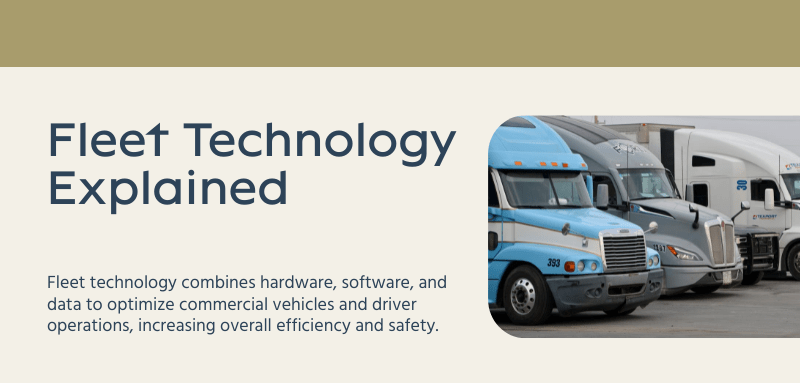
Fleet Technology Explained – For Modern Commercial Operations
What fleet technology actually means in commercial operations
Fleet technology refers to the integrated systems used to monitor, manage, and optimize commercial vehicles, drivers, and assets in active service. It combines hardware, software, connectivity, and data workflows into a unified operational layer rather than isolated tools. The defining characteristic is continuous visibility across vehicles, routes, driver behavior, and risk exposure.
Modern fleet technology is not limited to vehicle tracking or compliance reporting. It functions as an operational control surface that informs decisions in real time and supports accountability after the fact. Organizations adopt it to reduce uncertainty, not merely to automate existing tasks.
Why fleet technology matters as fleets scale and diversify
Fleet complexity increases nonlinearly as vehicle counts grow, service areas expand, and job types diversify. Manual oversight breaks down when managers can no longer directly observe operations or rely on informal reporting. Fleet technology restores clarity by creating consistent data across all vehicles and drivers.
This visibility becomes more critical when fleets operate across mixed environments such as highways, urban centers, job sites, and off-road areas. Technology provides continuity when physical supervision is impractical. The result is not just efficiency gains but operational stability under growth pressure.
Core components that define a modern fleet technology stack
A modern fleet technology stack is composed of interoperable systems rather than a single platform. Each component addresses a specific operational risk or decision need. The value comes from how these components reinforce one another.
Common foundational elements include:
- Vehicle telematics for location, speed, and engine data
- Dashcams for visual context and incident documentation
- Driver monitoring tools for behavior and policy adherence
- Asset tracking for trailers, equipment, and non-powered units
- Data dashboards that consolidate metrics into operational views
Effective stacks avoid redundancy while ensuring coverage across safety, productivity, and compliance domains.
How telematics systems translate vehicle data into decisions
Telematics systems capture data directly from vehicles and transmit it for analysis and action. The most valuable outputs are not raw data points but derived signals such as idling trends, route deviations, or maintenance indicators. These signals enable intervention before small issues escalate.
Telematics also establishes a shared factual baseline between drivers, managers, and leadership. Disputes about timing, location, or vehicle use are resolved through recorded data rather than subjective accounts. This consistency supports fair management and defensible decision-making.
The operational difference between tracking and intelligence
Basic tracking shows where a vehicle is located at a given moment. Fleet intelligence interprets patterns over time and connects them to outcomes such as fuel usage, service delays, or safety incidents. The distinction determines whether data is merely observed or actively used.
Organizations that stop at tracking often experience data fatigue without operational improvement. Intelligence-driven fleets define thresholds, alerts, and review cycles that convert information into action.

Dashcams as a foundational layer of fleet technology
Dashcams provide the visual dimension that other fleet technologies cannot capture. Video adds context to events that would otherwise be reduced to abstract data points. This context is critical for understanding collisions, near-misses, road conditions, and driver responses.
In modern fleet environments, dashcams are no longer standalone recording devices. They integrate with telematics and alerting systems to align video with vehicle data. This integration allows fleets to reconstruct events with precision rather than inference.
Operational impact of dashcams beyond accident review
Dashcams influence daily operations even when no incidents occur. Drivers tend to operate more consistently when expectations are clearly documented and enforced through objective systems. This behavioral stabilization reduces variability across the fleet.
From a management perspective, dashcams reduce time spent investigating complaints or claims. Video evidence shortens resolution cycles and limits exposure to disputed narratives. The operational benefit lies as much in prevention as in documentation.
Forward-facing, inward-facing, and multi-channel configurations
Forward-facing cameras document roadway conditions and external interactions. Inward-facing cameras capture driver behavior and cab activity. Multi-channel systems extend coverage to side or rear views for complex vehicles.
Each configuration serves a distinct purpose and carries different privacy and policy considerations. Selection depends on operational risk profiles rather than technological novelty.
Driver behavior monitoring and accountability systems
Driver monitoring systems analyze behaviors such as harsh braking, rapid acceleration, distracted driving, or seatbelt usage. These signals identify risk patterns that are invisible through mileage or time-based metrics alone. The goal is early correction rather than punitive enforcement.
Effective programs pair monitoring with coaching frameworks. Drivers receive clear feedback tied to specific events rather than generalized criticism. This approach improves adoption and sustains long-term behavior change.
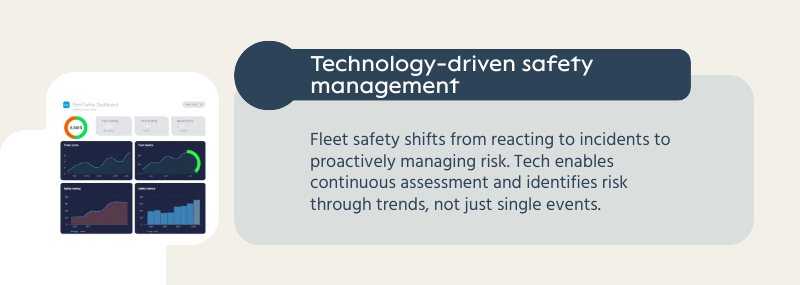
Fleet safety management as a technology-driven discipline
Fleet safety has shifted from reactive incident response to proactive risk management. Technology enables continuous assessment rather than periodic audits. Risk is identified through trends rather than isolated events.
Safety management systems integrate dashcam footage, telematics data, and driver metrics into unified safety scores or risk profiles. These profiles guide training priorities, route planning, and vehicle assignments.
The role of video in safety adjudication
Video evidence establishes objective truth in safety investigations. It clarifies fault, contextualizes driver decisions, and documents environmental factors. This clarity protects drivers from unfounded claims while holding unsafe behavior accountable.
Maintenance visibility through connected vehicle data
Fleet technology contributes to maintenance planning by monitoring engine diagnostics, mileage thresholds, and usage intensity. Predictive indicators allow maintenance to be scheduled based on condition rather than fixed intervals. This reduces downtime and avoids catastrophic failures.
Maintenance visibility also improves asset utilization. Vehicles are rotated or retired based on performance data rather than age alone. The outcome is a more reliable fleet with lower lifecycle costs.
Route optimization and service reliability
Route optimization tools analyze traffic patterns, delivery windows, and service constraints to reduce inefficiencies. These systems adjust routing dynamically when conditions change. Reliability improves when routes are based on real-world conditions rather than static assumptions.
Dashcam footage complements route data by revealing recurring environmental challenges. Construction zones, unsafe intersections, or access constraints become visible planning inputs rather than anecdotal complaints.
Compliance management in regulated fleet environments
Compliance requirements vary by industry, vehicle class, and jurisdiction. Fleet technology centralizes compliance data to reduce administrative burden and error risk. Automated logs and alerts prevent missed inspections or documentation lapses.
Dashcams play a supporting role by documenting compliance-related events. Proof of stops, interactions, or on-site conditions can be critical during audits or disputes.
Data consolidation and operational dashboards
Fleet technology generates large volumes of data that must be curated to remain useful. Dashboards present prioritized metrics aligned with operational goals. Effective dashboards emphasize exceptions and trends rather than exhaustive reporting.
Leadership relies on consolidated views to assess performance without operational micromanagement. The value lies in strategic oversight rather than daily intervention.
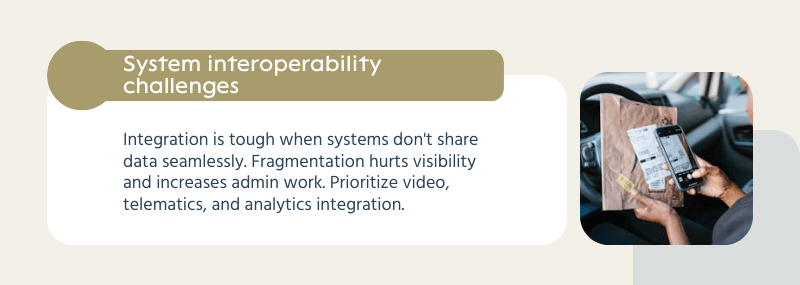
Integration challenges and system interoperability
Fleet technology ecosystems often involve multiple vendors and data sources. Integration challenges arise when systems are not designed to share data seamlessly. Fragmentation undermines visibility and increases administrative workload.
Successful fleets prioritize interoperability during procurement. Systems that integrate video, telematics, and analytics reduce duplication and improve decision accuracy.
Cybersecurity and data governance considerations
Fleet technology expands the digital footprint of operations. Vehicles become connected endpoints with data transmission capabilities. This connectivity introduces cybersecurity risks that must be managed proactively.
Data governance policies define who can access footage, how long data is retained, and how it is used. Clear governance protects driver privacy while preserving operational value.
Adoption barriers and organizational readiness
Technology adoption fails when organizational readiness is underestimated. Resistance often stems from unclear policies, inadequate training, or inconsistent enforcement. Successful deployments address people and process alongside technology.
Leadership alignment is critical. When expectations are communicated clearly and applied consistently, adoption accelerates. Technology then reinforces culture rather than conflicting with it.
Evaluating fleet technology effectiveness over time
Effectiveness is measured through operational outcomes rather than feature utilization. Reduced incident rates, improved on-time performance, and lower dispute resolution costs indicate meaningful impact. Metrics should align with original deployment goals.
Periodic review ensures systems evolve with operational changes. Fleet technology must adapt as routes, vehicles, and business models shift.
The strategic role of dashcams within fleet technology ecosystems
Dashcams anchor fleet technology by providing objective context across multiple operational domains. They support safety, training, compliance, and risk management simultaneously. This multi-functionality elevates dashcams from accessory to infrastructure.
When integrated thoughtfully, dashcams enhance the value of every other data stream. Visual evidence transforms abstract metrics into actionable understanding.
Fleet technology trends shaping near-term decision-making
Fleet technology continues to move toward greater automation and contextual awareness. Systems increasingly prioritize relevance over volume. The focus shifts from collecting data to interpreting it intelligently.
Dashcams are evolving alongside these trends, with improved event detection and tighter integration. The trajectory favors systems that reduce cognitive load for managers rather than increasing it.
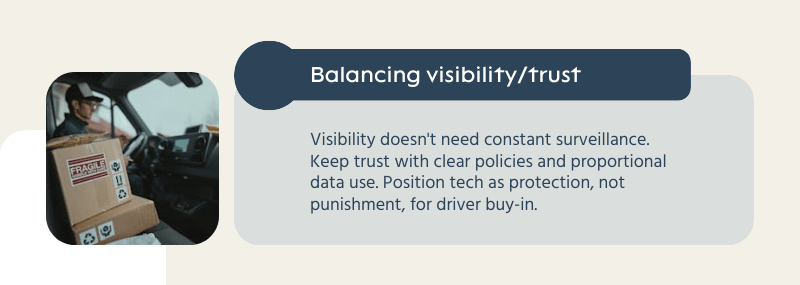
Balancing visibility with trust in driver-facing technology
Visibility does not require constant surveillance. Trust is maintained through transparent policies and proportional use of data. Drivers are more receptive when technology is positioned as protection rather than punishment.
Dashcams contribute to this balance when their purpose is clearly defined. Fair application reinforces credibility across the organization.
Fleet technology as an operational risk management tool
Operational risk extends beyond accidents to include delays, disputes, and reputational exposure. Fleet technology mitigates these risks by documenting reality as it unfolds. This documentation supports defensible decision-making.
Risk management becomes systematic rather than reactive. Organizations gain confidence in their ability to withstand scrutiny and uncertainty.
Preparing fleets for long-term technological evolution
Fleet technology should be selected with adaptability in mind. Rigid systems become liabilities as regulations, routes, and customer expectations change. Modular architectures support incremental upgrades without disruption.
Dashcams fit naturally into adaptable strategies because visual data remains relevant across use cases. Their utility persists even as analytics evolve.
Fleet Technology – Frequently Asked Questions
What is fleet technology used for?
Fleet technology is used to monitor vehicles, drivers, and assets while improving safety, efficiency, and accountability across commercial operations.
How do dashcams fit into fleet technology systems?
Dashcams provide visual context that complements telematics and analytics, supporting incident review, driver coaching, and risk management.
Is fleet technology only for large fleets?
Fleet technology benefits fleets of all sizes, though larger fleets typically experience greater gains due to increased complexity and risk exposure.
Do dashcams improve driver safety?
Dashcams improve safety by documenting events objectively and reinforcing consistent driving behavior through accountability and coaching.
How does fleet technology support compliance?
Fleet technology automates data collection and documentation, reducing administrative errors and providing defensible records during audits.
Can fleet technology reduce operating costs?
Operating costs decline when technology reduces incidents, downtime, fuel waste, and administrative inefficiencies.
What should fleets consider before adopting new technology?
Fleets should assess operational goals, integration needs, driver policies, and long-term adaptability before selecting technology.