
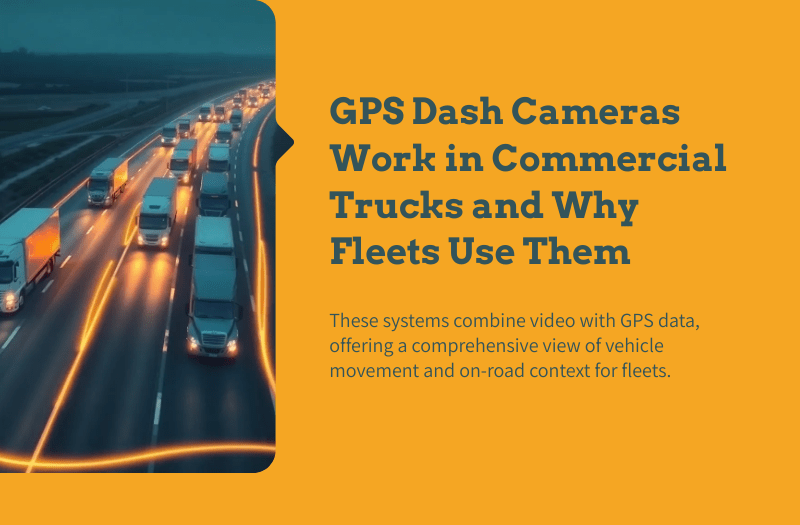
GPS Dash Cameras Work in Commercial Trucks and Why Fleets Use Them
GPS dash cameras integrate satellite-based location data with continuous video capture to give commercial fleets a unified view of vehicle movement and on-road context. These systems combine real-time geographic positioning with recorded visual evidence so that operators see both where a truck is and what is happening around it at any moment. In commercial applications this fused data becomes a foundational tool for risk mitigation, operational clarity, and fleet safety governance.
How GPS Dash Cameras Combine Video and Location Data
GPS dash cameras are embedded systems that synchronize motion imagery with positional information from global navigation systems. The camera component captures continuous or event-triggered video of the roadway and vehicle interior, while the GPS module tags each frame with latitude, longitude, time, speed, and heading. This dual stream of data produces a geospatially referenced visual record of each vehicle’s operation, making it possible to reconstruct trips with both visual context and precise movement coordinates.
The GPS component continuously receives signals from orbiting navigation satellites and computes accurate position fixes multiple times per second. That positional data is overlaid on video or stored in parallel with timestamps that match the video feed. When an event of interest occurs—such as hard braking, rapid acceleration, or a collision—the system bookmarks that video clip along with the exact GPS coordinates. This synchronization creates a breadcrumb trail of location-anchored video that is actionable for analysis and reporting.
The Role of GPS Data in Fleet Safety and Risk Management
GPS dash cameras extend safety oversight beyond simple cameras by adding where and how fast to the visual narrative. Raw video alone shows what happened but not the precise context of movement and route. GPS data augments video in key operational ways:
- Route verification: GPS tracks the actual path driven, making it possible to compare planned routes with actual movement.
- Speed and behavior analytics: Recorded speed data tied to visual footage clarifies whether violations or unsafe speeding occurred.
- Event geolocation: Incidents are tagged with specific coordinates and time, enabling precise incident reconstruction.
- Trend analysis: Over time, aggregated GPS and video data reveal patterns in driver behavior that can be addressed through training.
This combination reduces uncertainty in investigations and provides a structured evidentiary basis for decision-making after safety events.
Interpreting GPS Data for Compliance and Operational Insight
Beyond safety, the integration of GPS data with video recording feeds into broader operational oversight. For example:
- Delivery verification: GPS timestamps and video help confirm delivery locations and times, enhancing accountability.
- Fleet utilization tracking: Real-time location data supports efficient deployment of assets and reduces unnecessary idling.
- Route optimization: Historical GPS trails paired with video context can inform routing efficiencies and potential delays.
- Maintenance planning: Consistent location and movement records help forecast wear-and-tear patterns, signaling maintenance needs before breakdowns occur.
By merging positional data with visual evidence, fleets gain a granular picture of both tactical movements and strategic performance metrics.
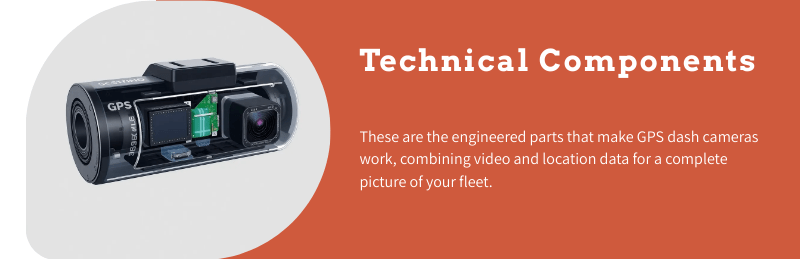
Technical Components That Enable GPS Dash Cameras
GPS dash cameras consist of several engineered subsystems that work in concert to deliver reliable data:
- Imaging sensor and optics: High-resolution video sensors with wide field of view capture environmental detail day and night.
- GPS receiver: An onboard module continuously triangulates satellite signals to calculate dynamic positional fixes.
- Accelerometers and gyroscopes: Motion sensors detect vehicle movement and help trigger recording when specific thresholds are exceeded.
- Telematics processor: Embedded computing hardware processes video, GPS data, and system triggers in real time.
- Storage and connectivity: Footage and positional logs are stored locally and often uploaded via cellular connectivity to cloud systems for later analysis.
These components together form a video telematics platform that unifies visual and positional data into actionable insight.
Storage and Event Triggering
GPS dash cameras operate in two primary modes: continuous recording and event-based capture. Continuous recording runs hour after hour, providing a complete visual record, while event-based capture conserves storage by saving clips only when specific triggers occur, such as:
- Hard braking
- Rapid acceleration
- Sharp turns
- Collision impact
- Excessive speeding
When such events occur, the GPS data anchored to the video enhances the evidentiary value of the clip.
Data Connectivity and Cloud Integration
Modern commercial GPS dash cameras often include cellular modems that upload recorded clips and GPS logs in near-real time to fleet management platforms. This cloud-enabled architecture allows managers to:
- Access footage remotely
- Correlate GPS tracks with video from multiple trucks
- Generate reports for review or compliance documentation
Cloud integration accelerates responsiveness and removes dependency on manual retrieval of on-site storage media.
How GPS Dash Cameras Support Real-Time Fleet Tracking and Operational Control
GPS dash camera systems deliver more than synchronized video and location logs; they provide live operational visibility into vehicle movement in ways legacy systems cannot. Fleets that integrate these systems with telematics platforms gain an always-on view of vehicle positions, status, and behavior. This capability enables dispatch decision-making with precise geographic context, reduces uncertainty around shipment progress, and drives dynamic responses to in-field conditions such as congestion, weather, or mechanical delays. Critical to this function is the GPS component, which continually calculates a vehicle’s real-time coordinates and relays that information alongside video footage. With this synchronous data stream, fleet managers can see not only where a truck is but what it is experiencing in the moment, strengthening responsiveness and reducing operational friction.
Operational control is particularly relevant when fleets manage multiple assets across large regions or diverse terrain. Traditional dispatch models rely on periodic check-ins or third-party reporting, which introduces lags and data gaps. GPS dash camera platforms reduce these gaps by automatically transmitting vehicle status through cellular networks and cloud portals. This constant data flow eliminates blind spots in fleet operations and provides immediate context for decisions that impact customer satisfaction, asset utilization, and safety compliance.
Drivers of Fleet Adoption: Beyond Basic Recording
Fleet decision-makers deploy GPS dash cameras because they deliver substantial operational and financial value beyond basic video recording. These systems support safety, accountability, and data-driven management practices that directly impact both risk and performance.
- Accident evidence: GPS-tagged video provides irrefutable evidence of events and location, which strengthens liability defense and clarifies fault.
- Driver behavior profiling: Combined GPS and video data allow fleets to monitor driving habits and implement targeted training that reduces crash risk.
- Insurance cost management: Verified GPS dash camera records are often accepted by insurers to justify premium credits or mitigate costly claims.
- Regulatory support: Precise GPS location data assists in compliance with route restrictions, hours-of-service enforcement, and other trucking regulations.
These operational benefits help fleets transition from reactive management to proactive oversight.
Why GPS Dash Cameras Are a Strategic Fleet Investment
GPS dash cameras are not merely video recorders with locational tags; they are integrated operational tools that enhance visibility, enforce standards, and contribute measurable returns. Fleets that use this technology successfully integrate it with wider telematics systems to:
- Improve safety culture by providing transparent evidence of events.
- Reduce accident-related costs through data-driven coaching and accountability.
- Optimize routing decisions based on actual movement data.
- Increase operational confidence by combining ‘what happened’ with ‘where and how it happened’.
This convergence of visual and geospatial data transforms fleet management from isolated metrics to a cohesive intelligence ecosystem.
CommercialDashcams.com’s Approach to GPS Dash Camera Integration
CommercialDashcams.com’s GPS dash camera solutions are engineered specifically for heavy-duty and commercial fleet applications. Their systems fuse high-definition video recording with precise GPS tracking to deliver a unified dataset that fleet managers can use for safety, compliance, and performance oversight. These solutions support real-time alerts, cloud access to historical video tied to GPS logs, and integrated tools for post-event analysis. By aligning positional data with visual context, the platform helps operations teams quickly pinpoint where incidents occurred, review video evidence, and correlate driver behavior with location and speed patterns.
Integrating GPS Dash Cameras with Fleet Management Systems
When GPS dash cameras are integrated with broader fleet management systems, they become part of a comprehensive telematics and decision support suite. Integration enables:
| Capability | What It Enables |
| Route tracking | Verifies compliance with planned routes and schedules |
| Driver scoring | Combines positional behavior with safety events for performance assessments |
| Predictive alerts | Uses GPS speed and motion data to anticipate risky behavior |
| Operational reporting | Fuses video and GPS logs for executive and compliance reporting |
This interoperability multiplies the value of GPS dash cameras by embedding them in broader operational workflows rather than treating them as standalone devices.
Data Fusion: Video Telematics as a Decision-Support System
GPS dash cameras represent a class of video telematics systems, where telematics data—GPS, engine inputs, motion sensors—is fused with video streams to create actionable intelligence. Instead of discrete datasets—location history in one silo, video in another—video telematics interleaves these data streams into unified insights.
For example:
- A harsh braking event is not only logged by accelerometers but also tied to a specific GPS coordinate and an exact moment of visual evidence.
- An unauthorized route deviation is documented with both positional telemetry and a corresponding video segment of the roadway and driver response.
- Patterns of frequent idling are correlated with location clusters, revealing operational inefficiencies that can be addressed through route redesign or scheduling adjustments.
This integrated dataset empowers analysts and managers to elevate their decisions from reactive incident logging to predictive operational optimization. Modern platforms frequently include dashboards capable of visualizing fused data, highlighting historical trends, behavioral outliers, and geo-anchored incidents that align with broader performance metrics.
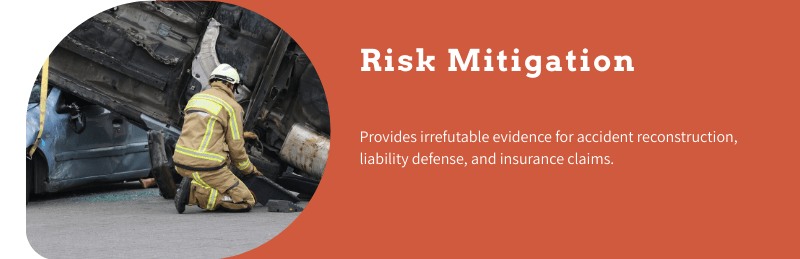
Reducing Operational Costs Through GPS Dash Camera Implementation
Fleets that deploy GPS dash cameras often see financial impact extending beyond direct safety outcomes. GPS-enabled footage reduces uncertainty in accident claims and liability disputes, which can otherwise lead to prolonged legal exposure or inflated settlements. Validated location data tied to clear visual evidence helps investigators determine what occurred without relying solely on subjective accounts. This clarity accelerates claims resolution and reduces administrative burden.
GPS dash cameras also support fuel and maintenance cost control. By providing a reliable record of vehicle routes, stop patterns, and movement behavior, fleets gain visibility into inefficiencies such as excessive idling, circuitous routing, or aggressive driving that accelerates wear. This data enables targeted interventions—for example, adjusting route plans to avoid congestion corridors or retraining drivers whose speed profiles correlate with increased fuel usage.
Cloud Storage, Event Tagging, and Long-Term Video Governance
Storage and management of GPS dash camera data require both capacity and indexing intelligence. Continuous raw video streams are large, and without structured organization they become impractical to review. Modern systems employ event tagging—intelligent markers that preserve key moments such as collisions or harsh maneuvers while archiving routine footage according to retention policies.
GPS coordinates, timestamps, and trigger thresholds work together to catalog video into retrievable segments that can be accessed quickly when needed. Fleet managers can search by location, time range, or event type without manually reviewing hours of footage.
Cloud storage enables indexing at scale. Video and positional logs uploaded to centralized repositories allow structured retention strategies and secure access controls. Cloud architecture also protects against data loss if local hardware is damaged or compromised.
Operational Risks and Mitigation Strategies
While GPS dash cameras are powerful, professional implementation requires attention to potential risks:
- Data overload: High volumes of video and GPS data can overwhelm storage and analysis systems if not managed with automated trimming and indexing.
- Connectivity gaps: In areas with weak cellular coverage, near-real-time uploads may be delayed, necessitating robust onboard storage.
- Driver acceptance: Without clear policies, drivers may perceive video monitoring as punitive. Clear communication of purpose and privacy boundaries mitigates resistance.
Mitigating these risks involves deliberate policy design, tiered data retention strategies, and coordinated infrastructure planning.
How GPS Dash Cameras Influence Safety Culture and Driver Performance
GPS dash cameras influence organizational safety culture by creating consistent accountability grounded in objective data. When drivers understand that actions are recorded and anchored to precise geographic data, compliance with safety standards tends to increase. The technology becomes a framework for measurable coaching rather than anecdotal discipline.
Documented patterns of risky driving—such as speeding within specific corridors or repeated harsh braking events in dense traffic zones—can be addressed in targeted training sessions. Conversely, safe performance can be documented and recognized. This balanced approach supports both accountability and morale.
Objective evidence also reduces internal disputes following incidents. Instead of relying on memory or conflicting narratives, managers can review location-tagged footage to determine root causes and implement corrective actions grounded in verifiable facts.
People Also Ask – GPS Dash Cameras
What differentiates a GPS dash camera from a standard dash cam?
A GPS dash camera links positional data to video footage, providing precise location, speed, and route information alongside visual context, whereas standard dash cams record only video without geospatial tagging.
Can GPS dash camera data be used in insurance claims?
Yes, GPS-tagged video records deliver documented evidence of incident location, time, and context, which strengthens claims handling and liability assessments.
Do GPS dash cameras drain the battery of a truck?
Commercial systems are designed for vehicle electrical systems and consume low power; their impact on battery life is minimal when installed correctly.
Is GPS tracking required for all commercial vehicles?
Regulatory requirements vary, but many fleets adopt GPS tracking voluntarily because it supports safety, operational oversight, and compliance with route and hours-of-service standards.
How accurate is the GPS data in a dash camera?
GPS modules in commercial dash cameras typically provide location fixes with accuracy within a few meters, sufficient for route tracking, speed verification, and event geolocation.
Can GPS dash cameras help improve driver performance?
Yes, by combining video context with GPS-based behavior tracking (such as speed and route adherence), fleets can identify and correct unsafe habits through structured coaching.
What happens to the data captured by GPS dash cameras?
Captured video and GPS logs are stored locally and often uploaded to cloud platforms, where they can be retrieved for analysis, reporting, and record-keeping.
Are GPS dash cameras compatible with fleet management software?
Most commercial GPS dash camera systems are designed to integrate with fleet telematics platforms, enabling unified dashboards that combine visual and positional data streams.
A GPS dash camera system does more than record events; it anchors them in space and context so commercial fleets can understand not just that something happened, but precisely where and how. This alignment of video and location data supports safer operation, clearer accountability, and operational efficiency.