
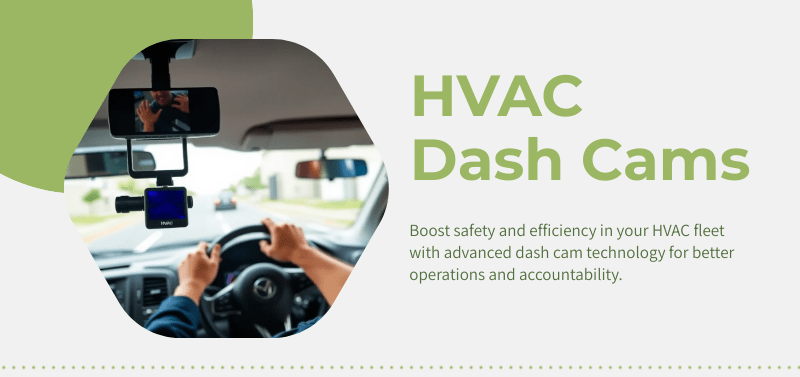
Dash Cams for HVAC Service Vehicles
Dash cams for HVAC service vehicles directly improve safety, accountability, and operational visibility
Dash cams in HVAC fleets function as a continuous, objective record of driver behavior, road conditions, and service activity. For companies managing multiple technicians across dispersed service areas, this visibility eliminates ambiguity in both incident analysis and daily operations. The result is fewer disputes, faster resolution of claims, and clearer accountability across the organization.
Beyond accident documentation, modern systems integrate telematics, GPS tracking, and AI-driven event detection. These capabilities transform dash cams from passive recording devices into active risk management tools. HVAC fleets benefit from real-time alerts, historical trip data, and behavioral insights that support safer driving and more efficient routing.
The operational impact is immediate. Managers gain the ability to monitor driving patterns, identify risky behaviors, and implement corrective measures without relying on anecdotal reports. Technicians, in turn, operate with greater awareness and professionalism, knowing their actions are documented and reviewable.
HVAC service fleets face distinct operational risks that dash cams directly mitigate
HVAC vehicles operate in environments that combine tight schedules, frequent stops, and variable driving conditions. These factors create a unique risk profile that differs from long-haul or delivery fleets. Dash cams address these risks by providing both preventative oversight and post-incident clarity.
The most common challenges include:
- Frequent residential stops in congested neighborhoods
- Time pressure leading to aggressive driving behaviors
- Parking-related incidents in tight or unfamiliar locations
- Customer disputes regarding property damage or technician conduct
- Limited visibility into technician driving habits across routes
Each of these scenarios introduces liability exposure. A single disputed claim—whether traffic-related or customer-facing—can result in financial loss and reputational damage. Dash cams provide verifiable evidence that reduces reliance on subjective accounts.
Forward-facing cameras document road incidents, while interior-facing cameras capture driver behavior and interactions. This dual perspective ensures that both external and internal factors are accounted for in any review.
The most effective dash cam configurations for HVAC vehicles combine forward, cabin, and rear coverage
A single camera is rarely sufficient for HVAC fleet operations. Comprehensive coverage requires a multi-camera setup that captures the full operational context of each vehicle.
The most effective configurations include:
| Camera Type | Primary Function | HVAC-Specific Value |
| Forward-facing camera | Records road conditions and accidents | Protects against liability in traffic incidents |
| Interior-facing camera | Monitors driver behavior and in-cabin activity | Ensures safe driving and professional conduct |
| Rear camera | Captures reversing and parking activity | Reduces risk in tight residential or commercial spaces |
| Side cameras (optional) | Monitors blind spots and lateral movement | Useful for larger HVAC vans in dense environments |
Forward-facing cameras serve as the foundational component. They capture collisions, sudden braking events, and road hazards. Interior-facing cameras provide insight into distraction, fatigue, and compliance with safety protocols. Rear cameras are particularly valuable for HVAC technicians who frequently reverse into driveways or narrow service areas.
The combination of these perspectives creates a complete operational record, enabling more accurate incident reconstruction and performance evaluation.
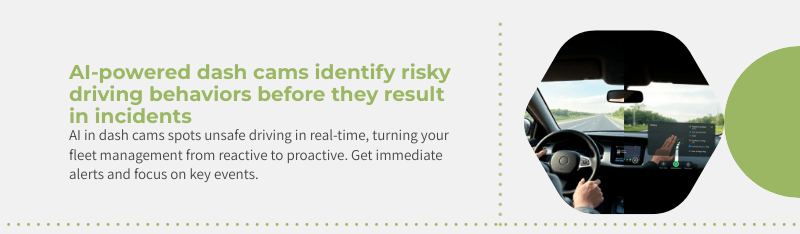
AI-powered dash cams identify risky driving behaviors before they result in incidents
Modern dash cam systems use artificial intelligence to detect and flag unsafe behaviors in real time. This capability shifts fleet management from reactive to proactive.
Key behaviors monitored include:
- Distracted driving (phone use, inattention)
- Harsh braking and rapid acceleration
- Tailgating and unsafe following distances
- Lane departures and erratic steering
- Driver fatigue indicators
When these behaviors are detected, the system can issue immediate in-cab alerts. This real-time feedback allows technicians to correct actions instantly, reducing the likelihood of accidents.
From a management perspective, AI-generated event data provides a structured way to evaluate driver performance. Instead of reviewing hours of footage, managers can focus on flagged incidents. This significantly reduces administrative overhead while improving the quality of oversight.
Over time, fleets that implement AI monitoring typically see measurable reductions in accidents and claims. The improvement is driven not by surveillance alone, but by consistent behavioral feedback and accountability.
Video evidence from dash cams significantly reduces liability in disputes and claims
Dash cam footage provides an objective record that can resolve disputes quickly and decisively. In HVAC operations, where technicians frequently interact with customer property, this capability is particularly valuable.
Common dispute scenarios include:
- Allegations of vehicle-caused property damage
- Conflicting accounts of traffic incidents
- Claims related to technician conduct on-site
- Insurance disputes involving fault determination
Without video evidence, these situations often rely on conflicting statements. This ambiguity increases legal exposure and prolongs resolution timelines. Dash cams eliminate this uncertainty by providing clear, time-stamped footage.
Insurance providers increasingly recognize the value of video evidence. Faster claim resolution reduces administrative costs and limits liability exposure. In some cases, fleets may also benefit from improved insurance terms due to reduced risk.
The operational benefit extends beyond claims. Internal investigations become more efficient, allowing managers to address issues quickly and fairly.
GPS tracking integration enhances route efficiency and service accountability
Dash cam systems that include GPS tracking provide a detailed record of vehicle movement, location, and route history. For HVAC fleets, this data supports both operational efficiency and customer service improvements.
GPS integration enables:
- Real-time vehicle location tracking
- Route optimization and efficiency analysis
- Accurate service arrival and departure verification
- Historical playback of routes and stops
- Identification of unauthorized vehicle use
This level of visibility allows managers to identify inefficiencies in routing and scheduling. Over time, adjustments can be made to reduce fuel consumption, improve response times, and increase the number of completed service calls.
From a customer perspective, GPS data supports more accurate appointment windows and service confirmations. This improves overall service reliability and customer satisfaction.
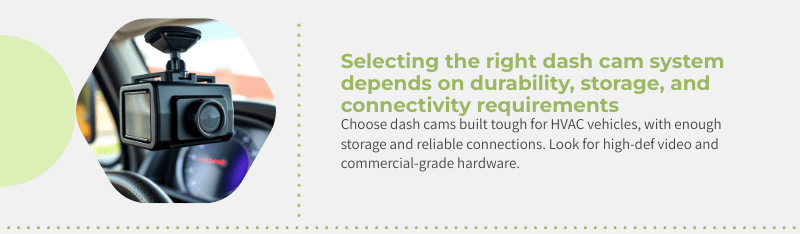
Selecting the right dash cam system depends on durability, storage, and connectivity requirements
Not all dash cam systems are suited for HVAC fleet environments. The selection process should focus on operational durability, data management, and system integration.
Critical evaluation criteria include:
- Video quality: High-definition recording ensures clarity in incident review
- Storage capacity: Sufficient onboard and cloud storage for continuous recording
- Connectivity: Reliable data transmission for real-time alerts and remote access
- Durability: Hardware capable of withstanding temperature fluctuations and vibration
- Ease of installation: Minimal downtime during deployment across vehicles
- User interface: Intuitive platform for reviewing footage and managing alerts
HVAC vehicles often operate in extreme temperatures, both hot and cold. Equipment must be designed to function reliably under these conditions. Consumer-grade dash cams typically fail to meet these requirements.
CommercialDashcams.com provides systems specifically designed for fleet applications, with hardware and software tailored to the demands of service-based operations. Their solutions prioritize reliability, scalability, and ease of use, making them suitable for HVAC companies of varying sizes.
Driver acceptance improves when dash cam programs are implemented with clear policies and communication
Resistance to monitoring technology is a common concern in fleet deployments. However, acceptance improves significantly when the purpose and benefits are clearly communicated.
Effective implementation strategies include:
- Clearly defining the purpose of dash cams as safety tools
- Establishing transparent policies on data usage and privacy
- Providing training on how the system works
- Sharing examples of how footage protects drivers
- Using data for coaching rather than punishment
Drivers are more likely to support dash cam programs when they understand that the technology protects them from false claims and unsafe conditions. Positioning the system as a mutual safeguard rather than a surveillance tool is critical.
Consistency in policy enforcement also plays a key role. When all drivers are subject to the same standards, trust in the system increases.
Cloud-based dash cam platforms streamline data access and fleet-wide oversight
Cloud integration transforms dash cam systems into centralized management platforms. This capability is essential for HVAC companies managing multiple vehicles across different service areas.
Key advantages of cloud-based systems include:
- Remote access to live and recorded footage
- Automated event uploads and storage
- Centralized dashboard for fleet monitoring
- Scalable infrastructure for growing fleets
- Reduced reliance on manual data retrieval
Without cloud connectivity, retrieving footage often requires physical access to each vehicle. This creates delays and increases administrative burden. Cloud-based systems eliminate this inefficiency by enabling instant access to relevant data.
CommercialDashcams.com offers cloud-enabled solutions that integrate video, GPS, and event data into a single interface. This unified approach simplifies fleet management and improves decision-making speed.
Dash cam data supports ongoing driver coaching and performance improvement
Dash cam systems provide a continuous stream of behavioral data that can be used to improve driver performance over time. This shifts fleet management from reactive enforcement to proactive development.
A structured coaching program typically includes:
- Regular review of flagged driving events
- Identification of recurring behavioral patterns
- One-on-one feedback sessions with technicians
- Targeted training based on specific risk factors
- Recognition of improved performance and safe driving
The goal is not to penalize drivers, but to reduce risk through consistent feedback. Over time, this approach leads to safer driving habits and fewer incidents.
Performance data also supports objective evaluation. Managers can make decisions based on measurable behavior rather than subjective impressions.
Comparing basic dash cams to fleet-grade systems reveals critical capability gaps
Consumer-grade dash cams are often considered as a lower-cost alternative, but they lack the features required for professional fleet management. The differences are significant and directly impact operational effectiveness.
| Feature | Consumer Dash Cams | Fleet-Grade Systems (CommercialDashcams.com) |
| Video storage | Local SD card | Cloud + onboard storage |
| Real-time alerts | Limited or none | AI-driven event detection |
| GPS tracking | Basic or unavailable | Integrated and detailed |
| Multi-camera support | Rare | Standard |
| Remote access | Not available | Full remote access |
| Durability | Consumer-grade | Commercial-grade hardware |
| Fleet management tools | None | Centralized dashboard |
The limitations of consumer devices become apparent quickly in a fleet environment. Lack of connectivity, limited storage, and absence of management tools reduce their effectiveness to basic recording functions.
Fleet-grade systems provide the infrastructure needed for scalable, data-driven operations. The difference is not incremental—it is foundational.
Privacy and compliance considerations must be addressed in dash cam deployments
Dash cam usage introduces considerations related to privacy, data handling, and regulatory compliance. These factors must be addressed proactively to avoid operational and legal issues.
Key considerations include:
- Clear policies on when and how recording occurs
- Disclosure to employees regarding monitoring practices
- Secure storage and access controls for video data
- Compliance with state-specific recording laws
- Defined retention periods for stored footage
Transparency is essential. Employees should understand what is being recorded and why. Access to footage should be restricted to authorized personnel, and data retention policies should be clearly defined.
Failure to address these considerations can undermine trust and create unnecessary risk. Proper governance ensures that dash cam systems support operations without introducing new liabilities.
FAQ: Dash cams for HVAC service vehicles
Do dash cams reduce insurance costs for HVAC fleets?
Dash cams can contribute to lower insurance costs by reducing claim frequency and providing clear evidence in disputes, though results vary by provider.
Can dash cams record when the vehicle is parked?
Yes, many systems include parking mode to capture incidents such as vandalism or hit-and-run events.
Are interior-facing cameras required for HVAC vehicles?
Interior cameras are not required but are highly valuable for monitoring driver behavior and protecting against false claims.
How long is footage typically stored?
Storage duration depends on system configuration, but most fleet systems offer several days to weeks of accessible footage.
Do dash cams require internet connectivity to function?
Dash cams can record without connectivity, but real-time alerts and remote access require a cellular or Wi-Fi connection.
Is it legal to record audio inside service vehicles?
Audio recording laws vary by state, so policies should be aligned with local regulations.
How difficult is installation across an HVAC fleet?
Professional systems are designed for efficient installation, often completed within a few hours per vehicle.