

Are Dash Cams Legal? State-by-State Guide
Dash cams are legal in the United States, but drivers must follow state rules for windshield placement, audio recording, privacy, and safe operation. For most drivers, the answer is straightforward — problems arise from where the camera is mounted, whether audio is recorded without consent, and how footage is handled after an incident.
Dash Cam Legality Depends on Mounting, Audio Consent, and Privacy
Dash cam laws are mainly shaped by three issues: visual obstruction, consent to record sound, and responsible use of captured footage. A dash cam should not interfere with the driver’s clear view of the road. Many states restrict objects attached to the windshield — including cameras, GPS devices, toll transponders, and phone mounts. Some states allow windshield-mounted devices only in specific corners or behind the rearview mirror. Other states prefer dashboard mounting.
Audio rules are separate from video rules. Recording the road is different from recording private conversations, customers, employees, or passengers who did not know sound was being captured. Commercial fleet operators in particular should use visible notices, written policies, and microphone controls to reduce legal exposure.
The main compliance areas are:
- Windshield or dashboard placement
- Driver visibility and road obstruction
- Audio consent requirements
- Interior-facing camera disclosure
- Footage sharing and publication
- Employer or fleet recording policies
- Evidence handling after an accident
The Safest Legal Placement Is Behind the Rearview Mirror or on the Dashboard
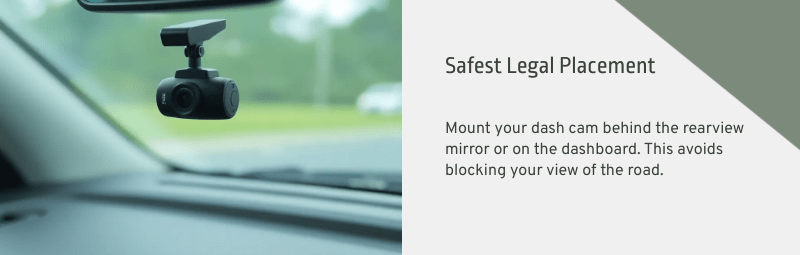
A small camera placed high and centered behind the rearview mirror typically creates the least visual obstruction and satisfies windshield rules in most states.
The safest dash cam placement is behind the rearview mirror or on the dashboard where the camera does not block the driver’s forward view. Drivers should avoid placing cameras in the middle of the windshield, low in the center of the glass, directly in front of the steering wheel, or anywhere that interferes with airbags.
Poor placement creates practical problems even when dash cams are otherwise legal. A badly mounted camera may trigger a traffic citation, weaken the usefulness of footage, or create an argument that the driver’s visibility was impaired during a collision.
Audio Recording Is the Most Common Dash Cam Legal Risk
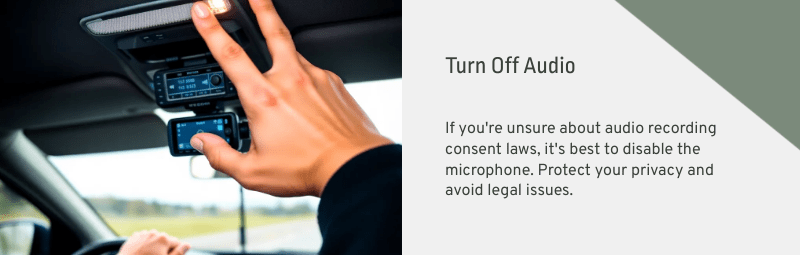
Audio recording is governed by state wiretapping and eavesdropping laws — not the same rules that apply to road-facing video.
This distinction matters for taxis, rideshare vehicles, delivery vehicles, work trucks, and fleet vehicles. A front-facing dash cam that records only road video creates far fewer privacy issues than a cabin-facing camera with an active microphone. The most cautious approach is to disable audio unless sound is necessary.
| Recording Feature | Legal Sensitivity | Best Practice |
|---|---|---|
| Road-facing video | Lower | Mount safely and avoid obstruction |
| Cabin-facing video | Medium | Disclose recording clearly |
| Audio recording | Higher | Confirm consent rules by state |
| Live monitoring | Higher | Use written policies for fleets |
| Publicly shared footage | Higher | Blur faces, plates, and private details when appropriate |
State-by-State Guide: Are Dash Cams Legal?
Dash cams are generally legal in every state, but each state may treat windshield mounting and audio consent differently. The table below provides a practical state-by-state overview. Local rules, court interpretations, and vehicle-specific regulations may vary — the safest setup is a low-profile camera that does not obstruct visibility and has audio disabled unless consent requirements are satisfied.
| State | Dash Cam Legality and Practical Rule |
|---|---|
| Alabama | Legal. Mount the camera so it does not obstruct the driver’s view. Audio recording generally follows one-party consent rules. |
| Alaska | Legal. Avoid windshield obstruction and place the device outside the driver’s direct sightline. Audio recording is generally one-party consent. |
| Arizona | Legal with placement limits. Windshield-mounted devices should stay in permitted areas. Audio recording is generally one-party consent. |
| Arkansas | Legal. Mount the camera safely without obstructing visibility. Audio recording generally follows one-party consent rules. |
| California | Legal with strict placement limits. Dash cams should be mounted in allowed windshield areas. Audio recording generally requires all-party consent. |
| Colorado | Legal. Mounting must not interfere with the driver’s clear view. Audio recording generally follows one-party consent rules. |
| Connecticut | Legal, but audio recording is more sensitive. Mount safely and obtain consent before recording conversations. |
| Delaware | Legal, but windshield mounting can be restricted. Dashboard mounting is often safer. Audio recording generally requires all-party consent. |
| District of Columbia | Legal with careful placement. Avoid windshield obstruction and obtain consent for audio recording. |
| Florida | Legal if the camera does not obstruct the windshield view. Audio recording generally requires all-party consent. |
| Georgia | Legal, but windshield obstruction rules matter. Dashboard or unobtrusive mounting is safest. Audio recording generally requires consent from all parties in many private conversation contexts. |
| Hawaii | Legal with size and placement limits. Keep the camera in a permitted corner or unobtrusive location. Audio rules are generally less restrictive than all-party consent states. |
| Idaho | Legal. Mount the dash cam where it does not block the driver’s view. Audio recording generally follows one-party consent rules. |
| Illinois | Legal with placement restrictions. Avoid obstructing the windshield. Be cautious with audio because all-party consent rules may apply. |
| Indiana | Legal with placement limits. Dashboard or mirror-adjacent placement is safer. Audio recording generally follows one-party consent. |
| Iowa | Legal. The device should not obstruct the driver’s view. Audio recording generally follows one-party consent rules. |
| Kansas | Legal. Mount safely and keep the windshield clear. Audio recording generally follows one-party consent rules. |
| Kentucky | Legal. Avoid obstructing visibility or creating a distraction. Audio recording generally follows one-party consent rules. |
| Louisiana | Legal. Mounting should not block the driver’s view. Audio recording generally follows one-party consent rules. |
| Maine | Legal. Windshield or dashboard placement should not interfere with vision. Audio recording generally follows one-party consent rules. |
| Maryland | Legal with placement considerations. Audio recording generally requires all-party consent, making microphone use a higher-risk feature. |
| Massachusetts | Legal when safely mounted, but audio recording is highly sensitive. Secret audio recording can create significant legal exposure. |
| Michigan | Legal, but windshield mounting is more restricted than in many states. Dashboard mounting is often safer. Audio recording may require broader consent. |
| Minnesota | Legal, but windshield objects are heavily restricted. Dashboard mounting is the safer option. Audio recording generally follows one-party consent rules. |
| Mississippi | Legal. Mount the dash cam so visibility remains clear. Audio recording generally follows one-party consent rules. |
| Missouri | Legal. Avoid obstructing the driver’s view. Audio recording generally follows one-party consent rules. |
| Montana | Legal with placement limits. Keep the device in a permitted area. Audio recording may require consent from all parties. |
| Nebraska | Legal. Mount the device safely and avoid visual obstruction. Audio recording generally follows one-party consent rules. |
| Nevada | Legal. The camera must not block visibility or distract the driver. Audio recording rules can be more nuanced, so disclosure is safest. |
| New Hampshire | Legal if the dash cam does not obstruct the driver’s view. Audio recording generally requires consent from all parties. |
| New Jersey | Legal. Mount the camera in a non-obstructive position. Audio recording generally follows one-party consent rules. |
| New Mexico | Legal. Avoid windshield obstruction and driver distraction. Audio recording generally follows one-party consent rules. |
| New York | Legal. Mount the camera safely without blocking vision. Audio recording generally follows one-party consent rules. |
| North Carolina | Legal. Keep the device outside the driver’s direct line of sight. Audio recording generally follows one-party consent rules. |
| North Dakota | Legal. Mounting should not obstruct visibility. Audio recording generally follows one-party consent rules. |
| Ohio | Legal. Avoid obstructing the windshield or distracting the driver. Audio recording generally follows one-party consent rules. |
| Oklahoma | Legal. The camera should be positioned safely. Audio recording generally follows one-party consent rules. |
| Oregon | Legal. Mounting must not impair visibility or safe operation. Audio recording generally follows one-party consent rules. |
| Pennsylvania | Legal with specific placement limits. Audio recording generally requires all-party consent. |
| Rhode Island | Legal. Mount the device without obstructing the driver’s view. Audio recording generally follows one-party consent rules. |
| South Carolina | Legal. Keep the windshield view clear and the device secure. Audio recording generally follows one-party consent rules. |
| South Dakota | Legal. Mounting should not interfere with visibility. Audio recording generally follows one-party consent rules. |
| Tennessee | Legal, but windshield mounting may be restricted. Dashboard mounting is often safer. Audio recording generally follows one-party consent rules. |
| Texas | Legal. The dash cam must not obstruct visibility or distract the driver. Audio recording generally follows one-party consent rules. |
| Utah | Legal with placement limits. The device should stay in allowed windshield areas. Audio recording generally follows one-party consent. |
| Vermont | Legal. Mounting should not obstruct the driver’s view. Audio recording generally follows one-party consent rules. |
| Virginia | Legal if the device does not substantially obstruct the driver’s view. Audio recording generally follows one-party consent rules. |
| Washington | Legal, but windshield mounting is restricted. Dashboard mounting is usually safer. Audio recording generally requires all-party consent. |
| West Virginia | Legal. The camera should not obstruct visibility. Audio recording generally follows one-party consent rules. |
| Wisconsin | Legal with placement limits. Keep the camera in an allowed area. Audio recording generally follows one-party consent rules. |
| Wyoming | Legal. Mount the camera safely and keep the driver’s view clear. Audio recording generally follows one-party consent rules. |
Dash Cam Footage Can Be Used as Evidence When It Is Relevant and Properly Handled

Clear, time-stamped footage is more persuasive than blurry clips with incorrect dates or missing context — preserve the original file after any incident.
Dash cam footage can often be used in insurance claims, traffic disputes, accident investigations, and legal proceedings when the recording is relevant, authentic, and legally obtained. Video evidence may help establish vehicle speed, lane position, signal timing, right of way, road conditions, hit-and-run details, or the sequence of events before a crash.
When Footage May Be Less Useful
- The camera angle misses the key event
- The timestamp is wrong or not set
- The footage was edited or clipped selectively
- The camera obstructed the driver’s view
- Audio was recorded unlawfully
- The recording captures private or irrelevant material
Commercial Dash Cams Require Stronger Policies Than Personal Dash Cams
A personal driver usually needs to focus on placement and audio consent. A business must also consider employee notice, workplace privacy, data retention, access control, disciplinary use, union concerns, and customer disclosure. Interior-facing fleet cameras create additional sensitivity because recording may capture driver behavior throughout the entire workday.
A Strong Fleet Policy Should Cover
- Camera locations and recording angles
- Audio recording status
- Driver notice and acknowledgment
- Footage access permissions
- Retention and deletion schedules
- Accident review procedures
- Rules for sharing footage externally
Common Fleet Compliance Mistakes
- Vague “safety monitoring” language without specifics
- No written driver notice or acknowledgment
- Undefined footage retention periods
- No policy for sharing footage with insurers or attorneys
- Cabin audio enabled without employee consent
- No procedure after an incident
How Dash Cam Footage Is Typically Used
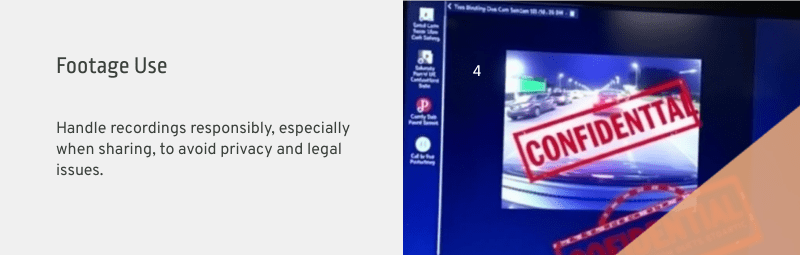
Footage serves different purposes across insurance, legal, safety coaching, and driver accountability workflows — cloud storage makes retrieval faster in all scenarios.
| Technology | Primary Function | Main Legal Concern |
|---|---|---|
| Dash cam | Records road or cabin video | Mounting, audio consent, privacy |
| GPS device | Provides navigation | Windshield placement |
| Backup camera | Assists reversing | Safe operation |
| Fleet telematics | Tracks driving data | Employee monitoring and data use |
| Cabin camera | Records interior activity | Notice, consent, privacy |
Drivers Should Turn Off Audio When Consent Is Unclear
Disabling the microphone reduces the biggest legal risk while preserving the main benefit of a dash cam: visual evidence. In most collisions, road-facing video provides the essential facts. Audio may help in some incidents, but it can also capture private conversations, customer details, medical information, or unrelated personal speech.
How to Choose a Legally Safer Dash Cam Setup
A legally safer setup uses a small camera, unobtrusive mounting, disabled audio by default, secure storage, and clear disclosure when passengers or employees are recorded. The best dash cam is not only the model with the highest resolution — legal practicality depends on whether the device can be installed cleanly, whether the microphone can be disabled, and whether files can be preserved without altering evidence.
Key Selection Criteria
- Compact camera size and low-profile mount
- Microphone on/off control
- Accurate timestamp settings
- Secure file storage and easy export
- Interior camera disclosure options
Performance Considerations
- Heat resistance for windshield environments
- Night vision and wide dynamic range
- Parking mode with responsible footage handling
- Cloud backup for evidence preservation
- AI event detection for automatic incident flagging
Frequently Asked Questions
Are dash cams legal in all 50 states?
Dash cams are generally legal in all 50 states, but state rules differ on windshield placement, driver visibility, audio recording, and privacy.
Can a dash cam be mounted on the windshield?
A dash cam can be mounted on the windshield in some states, but other states restrict windshield attachments or allow devices only in specific areas. Dashboard or rearview-mirror-adjacent placement is often safer.
Is it legal for a dash cam to record audio?
Dash cam audio recording is legal only when it complies with state consent laws. In all-party consent states, everyone in the conversation may need to agree before audio is recorded.
Can police use dash cam footage?
Police may use dash cam footage when the recording is relevant to an investigation and was obtained legally. Drivers should preserve original files after an incident.
Can insurance companies use dash cam video?
Insurance companies may consider dash cam footage when reviewing fault, damage claims, traffic signals, road conditions, and accident sequence.
Is a cabin-facing dash cam legal?
A cabin-facing dash cam may be legal, but it creates greater privacy concerns. Drivers and fleet operators should disclose interior recording and be especially careful with audio.
Should dash cam footage be posted online?
Dash cam footage should be shared carefully. Public posting can expose faces, license plates, private conversations, accident victims, minors, or sensitive locations.
Need a compliant fleet dashcam solution?
Our systems include cloud storage, AI event detection, and GPS tracking — with no contracts required. See Fleet Bundles & Pricing