
How Much Is a Dashcam?
Dashcam pricing ranges from under $50 for basic entry-level cameras to more than $1,000 for advanced AI-enabled fleet systems. Here’s what actually drives the cost — and how to choose the right tier for your operation.
The wide pricing gap exists because “dashcam” now covers multiple categories of technology. Some devices function as simple video recorders while others operate as integrated safety and monitoring systems capable of live streaming, remote access, telematics integration, and AI-powered event detection.
Several factors determine overall dashcam cost:
Hardware Factors
- Video resolution
- Front-facing vs. dual-camera
- AI safety features
- Driver monitoring capability
- Storage type and retention
- GPS functionality
Operational Factors
- Cloud connectivity
- Installation complexity
- Vehicle type
- Monthly software subscriptions
- Fleet management integration
- Cellular connectivity
Commercial Dashcams Usually Cost More Than Consumer Dashcams
Commercial dashcams operate under significantly different performance requirements than standard consumer cameras. Fleet systems are designed for continuous vehicle operation, long recording hours, remote monitoring, driver accountability, and liability protection across multiple vehicles.
Most commercial dashcam systems range from approximately $300 to more than $1,000 per vehicle when hardware, installation, cloud connectivity, and AI safety functionality are included. Many providers structure pricing through monthly service plans that combine hardware, cloud storage, GPS tracking, and fleet management software into a recurring subscription.
| Commercial Feature | Impact on Cost |
|---|---|
| AI Driver Monitoring | Higher |
| Multi-Camera Systems | Higher |
| Cloud Video Storage | Higher |
| Live Streaming | Higher |
| GPS Fleet Tracking | Higher |
| Local SD Recording Only | Lower |
| Single Front Camera | Lower |
| No Cellular Connectivity | Lower |
Commercial fleet pricing also varies based on installation requirements. Larger trucks, service vehicles, and commercial fleets may require more advanced wiring, auxiliary camera placement, and telematics integration than standard passenger vehicles.
Basic Dashcams Usually Cost Between $50 and $150
Entry-level dashcams are designed primarily for continuous local video recording. These systems generally include front-facing cameras with loop recording functionality and SD card storage. Most basic dashcams include 1080p recording, manual video retrieval, local SD card storage, basic collision detection, compact windshield mounting, and limited night vision capability.
Common Limitations of Budget Dashcams
- Storage corruption and inconsistent overwriting
- Weak night recording clarity and poor license plate visibility
- Reduced lifespan under heavy use
- No remote access, live notifications, or cloud backup
- Blurry motion capture during nighttime or adverse weather
Drivers purchasing lower-cost systems often prioritize affordability over evidence quality. That tradeoff becomes important after accidents where readable footage determines fault disputes, insurance investigations, or legal claims.
Mid-Range Dashcams Add Better Recording Quality and Reliability
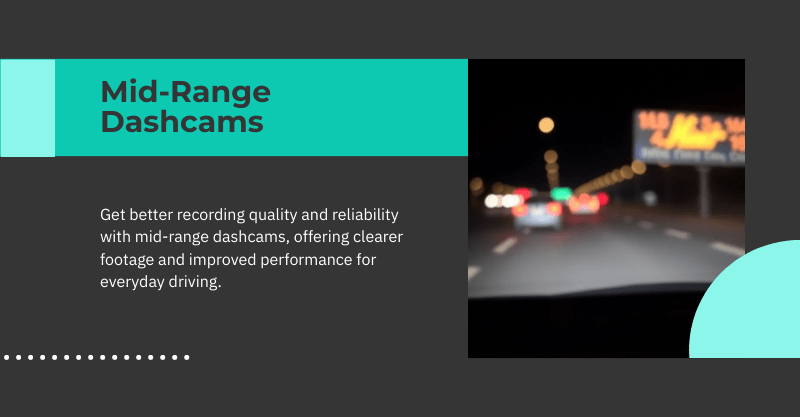
Mid-range systems deliver meaningfully better video quality, parking mode reliability, and sensor performance compared to entry-level alternatives.
Most consumers searching for a dependable dashcam ultimately purchase within the mid-range category. Systems in this pricing tier focus on higher-quality sensors, improved night performance, and better long-term stability.
| Dashcam Type | Typical Price Range |
|---|---|
| Basic Front Camera | $50–$150 |
| Dual Front and Rear Camera | $150–$350 |
| 4K Recording Systems | $250–$500 |
| AI-Enabled Smart Dashcams | $400–$1,000+ |
Video quality improvements become especially important during accident investigations. Higher resolution significantly improves license plate readability, lane visibility, distance clarity, low-light detail retention, and weather condition visibility. The difference between 1080p and 4K recording becomes highly noticeable when zooming into footage after an incident.
Parking mode functionality also improves substantially within this pricing category. Advanced parking monitoring systems can automatically begin recording if motion, vibration, or impact events occur while the vehicle is parked. Some mid-range dashcams also include buffered parking mode, which preserves several seconds before and after an event — providing more complete evidence during hit-and-run incidents.
AI Dashcams Cost More Because They Operate as Safety Systems
AI-enabled dashcams represent the highest pricing tier because they perform real-time safety analysis rather than passive recording. Rather than functioning solely as recording devices, AI dashcams continuously analyze driver behavior and roadway conditions.
What AI Dashcams Detect
- Distracted driving
- Tailgating and unsafe following distance
- Harsh braking
- Fatigue indicators
- Cell phone usage
- Seatbelt violations
- Collision risk events
Advanced System Capabilities
- Real-time driver alerts
- Cloud video uploads
- Live streaming
- Fleet dashboards and driver scorecards
- Telematics integration
- Event-triggered video capture
- Multi-camera support
For commercial fleets, AI functionality can reduce accident frequency, insurance exposure, false claims, driver coaching gaps, unsafe driving habits, and vehicle misuse. Some systems also generate driver performance scoring that managers can use to identify behavioral trends across an entire fleet.
Monthly Dashcam Subscription Fees Change the True Cost
Many modern dashcams operate on subscription-based platforms. Hardware pricing alone no longer reflects total ownership cost. Subscription plans commonly cover cloud video storage, remote footage access, live GPS tracking, AI event processing, fleet reporting, driver analytics, and cellular connectivity.
| Service Type | Monthly Cost |
|---|---|
| No Subscription | $0 |
| Basic Cloud Access | $5–$15 |
| Connected Consumer Dashcams | $10–$25 |
| Fleet AI Platforms | $25–$60+ |
Installation Costs Can Add Hundreds of Dollars
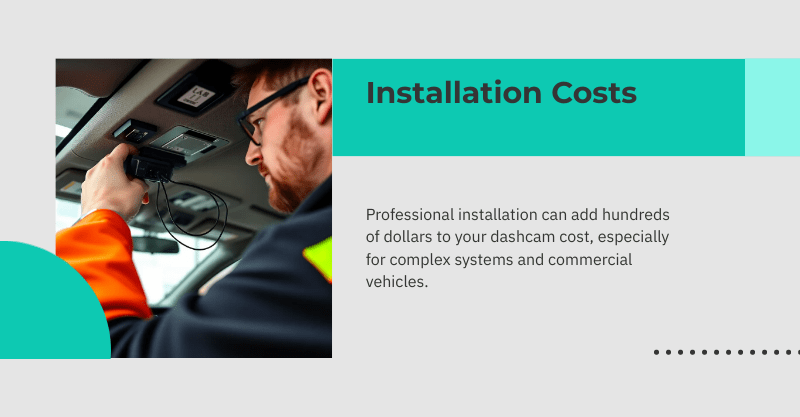
Professional hardwired installations provide cleaner cable management and more reliable power delivery — especially important for parking surveillance and continuous power features.
Dashcam installation pricing varies significantly depending on camera complexity, vehicle type, and wiring requirements. Basic windshield-mounted consumer cameras may require little more than adhesive mounting and USB power connection. Professional hardwired installations typically cost more but provide cleaner cable management and more reliable power delivery.
| Installation Type | Estimated Cost |
|---|---|
| DIY Plug-In Setup | $0–$50 |
| Basic Professional Install | $75–$200 |
| Dual-Camera Install | $150–$350 |
| Commercial Fleet Install | $300–$1,000+ |
Larger commercial vehicles frequently require more advanced installation planning due to cabin dimensions, auxiliary power systems, and multi-camera configurations. Poor installation quality can create operational problems — loose wiring, incorrect fuse connections, and poor camera placement can reduce reliability or interfere with vehicle electronics.
Video Storage Capacity Affects Long-Term Value
Most dashcams use one of three storage methods: local SD card storage, cloud storage, or hybrid local and cloud systems. Video resolution directly affects storage requirements — higher-quality footage consumes substantially more space, particularly with 4K recording.
| Recording Quality | Storage Consumption |
|---|---|
| 1080p | Moderate |
| 2K | High |
| 4K | Very High |
| Multi-Camera 4K | Extremely High |
Continuous recording also accelerates SD card wear. Many lower-quality memory cards fail prematurely under constant overwrite cycles. Commercial systems often use industrial-grade storage components designed specifically for high-temperature continuous recording environments.
Cheap Dashcams Often Create Hidden Risks
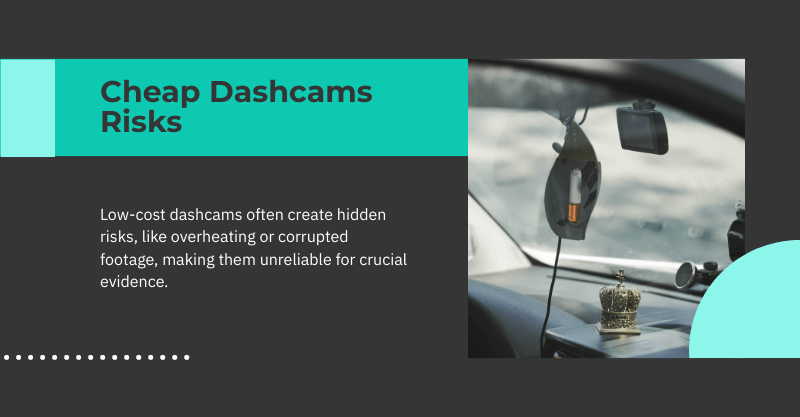
The most serious risk with cheap dashcams is footage failure during actual incidents — drivers often discover recording failures only after attempting to retrieve important footage.
Common Problems with Low-Cost Dashcams
- Overheating and random shutdowns
- Corrupted footage and failed loop recording
- Weak adhesive mounts and poor app performance
- Low night visibility
- Missing footage during actual incidents
Reliability becomes especially important in commercial operations where missing footage may impact insurance investigations, legal disputes, or driver accountability reviews. A dashcam only provides value if the recording remains intact and accessible after a collision or dispute.
Choosing the Right Dashcam Depends on Intended Use
The ideal dashcam depends less on raw price and more on operational requirements. A higher price does not automatically guarantee better value — some users overpay for enterprise functionality they may never use while others purchase low-cost systems that fail under real-world conditions.
- Reliable recording
- Good night vision
- Wide-angle coverage
- Affordable storage
- Cabin-facing cameras
- Continuous recording
- Parking mode
- Cloud retrieval
- AI safety monitoring
- GPS integration
- Driver analytics
- Remote access
- Multi-camera visibility
The strongest purchasing decisions align feature requirements with actual vehicle usage, driving exposure, and long-term reliability expectations.
Dashcam Pricing Continues to Shift Toward Connected Platforms
Modern dashcams increasingly function as connected data systems rather than standalone cameras. Cloud infrastructure, AI analytics, and real-time vehicle monitoring continue reshaping both pricing models and buyer expectations.
The market continues moving toward integrated safety ecosystems where recording, driver monitoring, telematics, and operational analytics operate together rather than separately. As these technologies become more sophisticated, the distinction between a simple dashcam and a full vehicle intelligence platform continues to narrow.
Ready to protect your fleet with enterprise-grade dashcam technology?Get GPS tracking, AI safety monitoring, and cloud video — with no contracts required.
See Fleet Plans & Pricing